


Call Us
+86-573-83601567
Email Us
info@aoketrade.com

Tungsten Raw Material Prices Soar
Recently, prices for cemented carbide (commonly known as “tungsten steel”), which uses tungsten as its core raw material, have skyrocketed, imposing significant cost pressures and operational challenges on downstream fastener mold and manufacturing enterprises. Industry data indicates that this round of price increases accelerated sharply in mid-December 2025, with multiple key raw material prices hitting record highs.
According to industry market monitoring, as of December 16, 2025, tungsten product prices have surged across the board. Among them, the price of black tungsten concentrate (≥65%), a fundamental raw material, has reached 415,000 yuan per ton, a staggering increase of approximately 190.2% since the beginning of the year. while its direct downstream product, ammonium paratungstate (APT), reached 610,000 yuan per ton, a 189.1% increase. More critically, tungsten powder and tungsten carbide powder—directly used in mold manufacturing—have surpassed the 900 yuan per kilogram threshold, more than tripling from the beginning of the year with a staggering 202.3% increase.
Analysts indicate this historic price surge stems from deep-seated supply-demand imbalances. On the supply side, tightened domestic tungsten ore production quotas and stricter environmental regulations have caused a rigid contraction in raw material supply. Concurrently, demand experienced a structural surge. Explosive growth in demand for diamond wire tungsten filaments used in the photovoltaic industry, coupled with steady expansion in high-end equipment manufacturing and defense sectors, collectively elevated tungsten's strategic importance and market pricing.
Tungsten steel serves as an indispensable core material for producing high-strength, high-wear-resistance fastener molds (such as thread rolling plates and punches). Its price has multiplied, rapidly propagating along the industrial chain. Production costs for mold manufacturers have surged dramatically, severely squeezing profits. Some small and medium-sized enterprises have even fallen into the predicament of “losing money on every order.” Currently, downstream tool manufacturers have announced price hikes for their products due to cost pressures.
Send Inquiry



X
We use cookies to offer you a better browsing experience, analyze site traffic and personalize content. By using this site, you agree to our use of cookies.
Privacy Policy
News
 Guide to Selecting Fastener Materials: Material Determines Performance, Heat Treatment Determines Strength, and Surface Treatment Determines Service Life!2026/07/13
A single sentence that captures the essence of the fastener industry: Choose the wrong material, and even the strongest fastener will break; Choose the wrong heat treatment, and even the highest-rated fastener is merely a false claim; Choose the wrong surface treatment, and even the best screw wi......
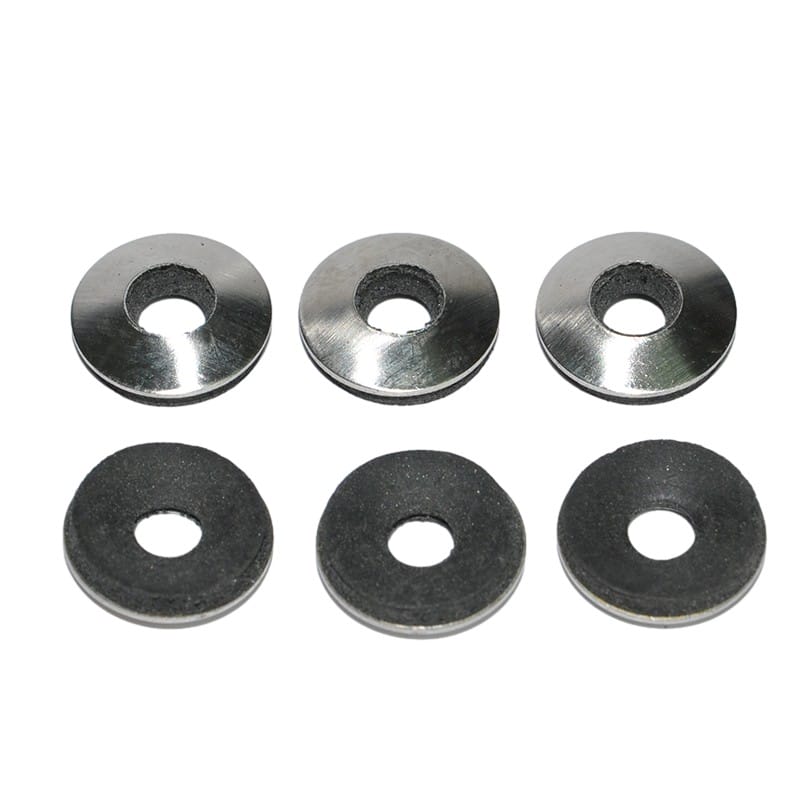 Jiaxing Aoke – Reliable Supplier of High-Performance EPDM Bonded Washers2026/07/10
Featuring prominent advantages such as aging resistance, high and low temperature resistance, water and vapor resistance, high resilience and ultra-long service life, EPDM bonded washers have become the most widely used and cost-effective sealing consumables for engineering supporting applications. ......