


Call Us
+86-573-83601567
Email Us
info@aoketrade.com

Characteristics of Quenching Cracks
Quenching cracks are common quenching defects caused by internal stresses that cannot be released during the quenching process. Preventing crack formation should begin at the product design stage. This involves selecting appropriate materials, implementing rational structural design, specifying suitable heat treatment requirements, and choosing optimal heating temperatures, heating media, cooling media, and cooling methods.
Material Considerations
1. Carbon content is the key factor influencing quenching cracks in steel: higher carbon content lowers the MS point, increasing the risk of cracking. Therefore, low-carbon steel should be selected when hardness and strength requirements are met.
2. Alloying elements affect the tendency for quenching cracks by influencing hardenability and the MS point. Steels with good hardenability can be paired with mild quenching media to avoid cracking in complex parts. After determining carbon content, prioritize grades containing minimal alloying elements or those with minimal impact on the MS point.
3. Steel selection must also consider overheating sensitivity, as such steels are prone to cracking.
Part Structural Design
1. Maintain uniform cross-sectional dimensions with no abrupt changes; wall thickness should also be consistent. Thick-walled sections may incorporate through-holes to reduce stress. Components with significant thickness variations should be designed as separate assemblies, to be joined only after heat treatment to prevent cracking from residual stresses.
2. Stress concentrations at edges, sharp corners, grooves, and transverse holes can lead to quenching cracks. These areas must be machined with rounded transitions to mitigate stress concentration risks.
3. Part geometry affects quenching cooling rates. Significant cooling rate variations within the same part can cause quenching cracks. Design should minimize such cooling rate differences.
Heat Treatment Technical Conditions
1. Prefer locally controlled quenching or surface hardening.
2. Adjust local hardness of quenched parts based on service requirements. When lower hardness is needed locally, avoid forcing uniform hardness throughout the part.
Send Inquiry



X
We use cookies to offer you a better browsing experience, analyze site traffic and personalize content. By using this site, you agree to our use of cookies.
Privacy Policy
News
 Guide to Selecting Fastener Materials: Material Determines Performance, Heat Treatment Determines Strength, and Surface Treatment Determines Service Life!2026/07/13
A single sentence that captures the essence of the fastener industry: Choose the wrong material, and even the strongest fastener will break; Choose the wrong heat treatment, and even the highest-rated fastener is merely a false claim; Choose the wrong surface treatment, and even the best screw wi......
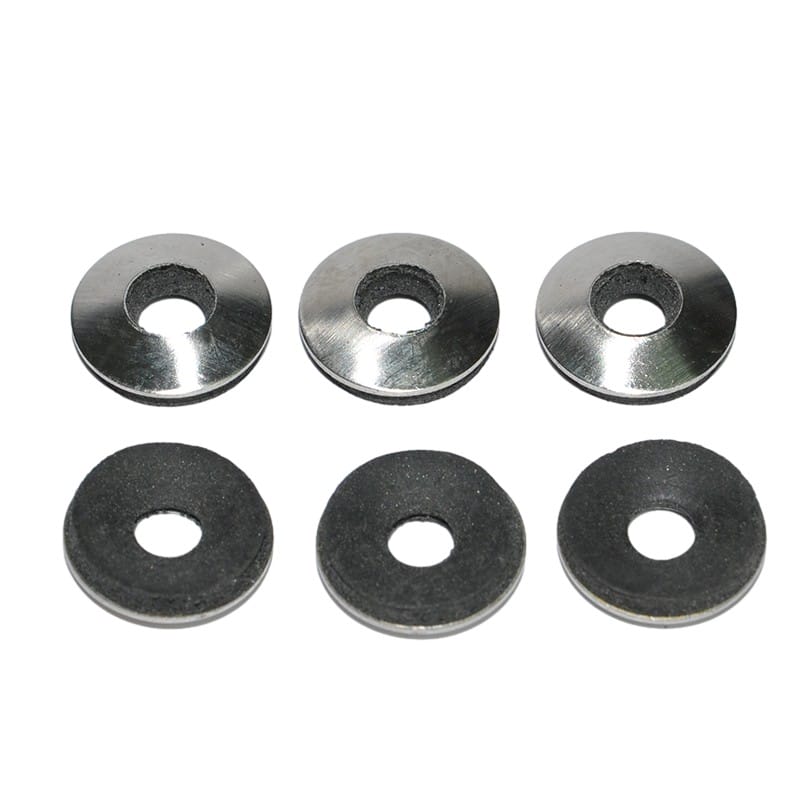 Jiaxing Aoke – Reliable Supplier of High-Performance EPDM Bonded Washers2026/07/10
Featuring prominent advantages such as aging resistance, high and low temperature resistance, water and vapor resistance, high resilience and ultra-long service life, EPDM bonded washers have become the most widely used and cost-effective sealing consumables for engineering supporting applications. ......