


Call Us
+86-573-83601567
Email Us
info@aoketrade.com

4.23% Year-Over-Year Growth! Global Fastener Market Headed Toward $100 Billion!
Recently, market research firm Mordor Intelligence released an in-depth report on the global industrial fastener industry through 2026, providing a comprehensive analysis of the industry’s overall scale, growth drivers, technological trends, and regional landscape over the next five years. Data indicates that the global fastener market will maintain steady growth, with high-end sectors such as new energy, aerospace, and wind power serving as the primary growth engines, while material innovation and smart upgrades emerge as the industry’s mainstream development directions.
According to the report, the global industrial fasteners market reached $88.39 billion in 2025 and is projected to grow to $92.13 billion in 2026, representing a year-over-year increase of 4.2%. The market is expected to exceed $113.33 billion by 2031. From 2026 to 2031, the industry’s compound annual growth rate (CAGR) is projected to be 4.23%, indicating a very solid overall growth trajectory.
Demand varies significantly across different application sectors, with four major industries serving as the core drivers of market growth. Among these, the new energy vehicle (NEV) sector is experiencing the most rapid development. As power batteries, electronic control systems, and battery swapping technologies become increasingly widespread, demand for specialized fasteners—which offer high strength, excellent sealing properties, and resistance to loosening—has surged significantly. These components must also withstand a wide range of vehicle temperature conditions. Meanwhile, lighter aluminum and titanium alloys are gradually replacing traditional carbon steel, representing a key focus of current industry R&D.
In the wind power and other renewable energy sectors, offshore wind projects have a strong demand for large-sized, ultra-high-strength bolts. Grade 10.9 and Grade 12.9 high-strength bolts are widely used, and these products must possess salt spray corrosion resistance exceeding 5,000 hours. Onshore wind power, driven by both new installations and the retrofitting of older equipment, has also fueled a continuous rise in sales of supporting products such as anti-loosening washers.
The aerospace sector maintains a leading position in the high-end market due to its high profit margins. The resumption of commercial aircraft production, coupled with countries’ efforts to advance domestic defense equipment manufacturing, has led to increasing demand for high-end fasteners made from titanium alloys and superalloys, which command significantly higher prices than standard fasteners. Previously, Homet spent $1.8 billion to acquire Stanley Black & Decker’s aerospace fastener business, further consolidating the competitive landscape in the high-end market, which is dominated by leading enterprises.
In addition, the global infrastructure recovery has provided strong support for industry development. The restart of infrastructure projects in Europe and the United States, accelerated urban development in Asia-Pacific nations such as China and India, and the gradual implementation of various energy projects in the Middle East continue to drive demand for products such as high-strength structural bolts, embedded anchor bolts, and seismic fasteners. As construction machinery continues to transition toward automation and intelligent systems, small precision fasteners used in robotic arms and hydraulic components are rapidly gaining prominence. This segment has achieved an annual growth rate of 5.66%, making it the fastest-growing category among all product types.
In terms of products and technology, lightweight design, long-lasting corrosion resistance, and precision intelligence have emerged as the three major trends. Currently, standard metal fasteners account for 49.23% of the market, with an expected annual growth rate of 4.61% over the next five years. The pace of replacement with aluminum, titanium, and magnesium alloys continues to accelerate, while fasteners made from carbon fiber composites are gradually being adopted in weight-reduction applications within the aviation and new energy vehicle sectors.
In terms of environmental protection, the use of hexavalent chromium protective coatings has been completely banned worldwide, and more eco-friendly coatings such as PTFE, zinc-nickel alloys, and Dacromet have become the industry standard. The salt spray resistance standard for standard fasteners has now been raised to over 1,000 hours, and new coatings with self-healing capabilities can extend the service life of fasteners used in wind power and marine engineering by more than 30%.
To align with the trend toward industrial intelligence, smart fasteners are rapidly gaining traction. Fasteners equipped with RFID and QR codes can monitor data such as stress, temperature, and vibration in real time; micro-screws with micron-level precision are also widely used in electronic and semiconductor manufacturing equipment.
From a regional perspective, the global market landscape exhibits distinct characteristics. Leveraging its robust manufacturing capabilities and strong infrastructure demand, the Asia-Pacific region has solidified its position as the world’s largest market, with a market share of 45% projected for 2026 and an average annual growth rate of 4.5%.
North America focuses on high-end manufacturing. By 2026, the local market size is projected to reach $22.29 billion, with a growth rate of 4.04% driven by the new energy vehicle and aviation industries. The region is also continuously improving its domestic supply chain system.
The European market is developing steadily. While import costs have risen due to the EU’s carbon border adjustment mechanism, this has created development opportunities for local high-end European brands. The region’s overall growth rate stands at 3.8%.
Leveraging the dual advantages of its energy sector and infrastructure projects, the Middle East has become the world’s fastest-growing regional market, with an average annual growth rate of 5.1%.
In terms of the competitive landscape, the global fastener industry exhibits a clear polarization: the low-to-mid-end market, dominated by standard carbon steel fasteners, features low entry barriers, a large number of companies, and a fragmented market structure; in contrast, high-end sectors such as aerospace and wind power have high technical barriers and a highly concentrated market, with leading international companies like Acument Global Technologies, Arconic Corporation, and Lisi Group holding the majority of market share.
The report also notes that the industry currently faces significant challenges. Frequent price fluctuations in specialty raw materials such as nickel, molybdenum, and titanium are continuously squeezing the profit margins of alloy fastener manufacturers; the implementation of the EU carbon border adjustment mechanism and various new global regulations on eco-friendly coatings have substantially increased production and export costs for companies; and overcapacity in low-end carbon steel fasteners in China and Southeast Asia has led to a market mired in price competition, further compressing the profit margins of small and medium-sized enterprises.
Industry analysts indicate that accelerating product upgrades, deepening penetration into high-end markets, and advancing green and low-carbon transformation will be the core strategies for global fastener companies to overcome their current development challenges.
Previous:Guide to Selecting Cylindrical Pins
Send Inquiry



X
We use cookies to offer you a better browsing experience, analyze site traffic and personalize content. By using this site, you agree to our use of cookies.
Privacy Policy
News
 Guide to Selecting Fastener Materials: Material Determines Performance, Heat Treatment Determines Strength, and Surface Treatment Determines Service Life!2026/07/13
A single sentence that captures the essence of the fastener industry: Choose the wrong material, and even the strongest fastener will break; Choose the wrong heat treatment, and even the highest-rated fastener is merely a false claim; Choose the wrong surface treatment, and even the best screw wi......
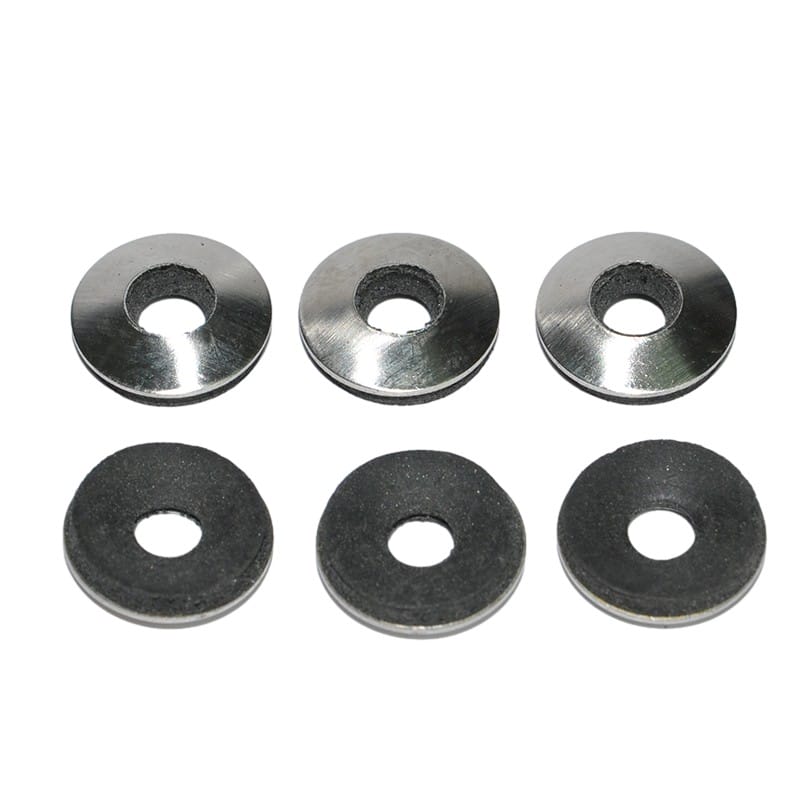 Jiaxing Aoke – Reliable Supplier of High-Performance EPDM Bonded Washers2026/07/10
Featuring prominent advantages such as aging resistance, high and low temperature resistance, water and vapor resistance, high resilience and ultra-long service life, EPDM bonded washers have become the most widely used and cost-effective sealing consumables for engineering supporting applications. ......