


Call Us
+86-573-83601567
Email Us
info@aoketrade.com

Choosing the “Coating” for Bolts
I. Core Principles
Zinc plating is the most common and economical surface treatment method for commercial fasteners. Typically, a passivation process is performed after zinc plating; depending on the passivation solution used, the resulting finish can appear white, blue, yellow, black, green, or other colors.
Nickel plating is divided into two types: electroplating and chemical plating. The finish appears silvery-white with a slight yellowish tint, featuring an attractive luster and excellent decorative properties.
Chromium plating is divided into two categories: decorative chromium plating, which produces a mirror-like finish; and functional hard chrome plating, designed to enhance the hardness and wear resistance of metal parts. It is important to note that to achieve effective corrosion protection, decorative chromium plating typically requires a preliminary layer of copper and nickel, making the process relatively complex.
II. Corrosion Resistance
Zinc plating falls under “sacrificial anode” protection. Since zinc is more chemically reactive than iron, in corrosive environments, zinc oxidizes first, thereby “sacrificing” itself to protect the bolt’s base metal. Even if the coating is slightly damaged, the exposed iron remains protected. Its corrosion resistance is moderate; generally, electrogalvanized bolts pass the neutral salt spray test for approximately 72 hours.
Nickel and chrome plating provide “physical barrier” protection. Their function is to isolate the bolt substrate from external moisture and air. However, if the coating is too thin or becomes damaged, corrosion will spread inward from the damaged area. The corrosion resistance of nickel plating alone is relatively limited. While chromium plating is extremely stable in the atmosphere, if the sole purpose is rust prevention, direct chromium plating is less effective than zinc plating and is also costly; therefore, it is used less frequently in industrial corrosion protection.
III. Hardness and Wear Resistance
This is the “trump card” of chromium plating. Chromium coatings possess extremely high hardness and a low coefficient of friction, resulting in excellent wear resistance. This is why many hydraulic cylinder piston rods and shock absorber rods are plated with “hard chrome.”
In contrast, zinc coatings have lower hardness and poor wear resistance. Although nickel coatings are harder than zinc and offer some wear resistance, they are far inferior to chromium coatings.
Send Inquiry



X
We use cookies to offer you a better browsing experience, analyze site traffic and personalize content. By using this site, you agree to our use of cookies.
Privacy Policy
News
 Guide to Selecting Fastener Materials: Material Determines Performance, Heat Treatment Determines Strength, and Surface Treatment Determines Service Life!2026/07/13
A single sentence that captures the essence of the fastener industry: Choose the wrong material, and even the strongest fastener will break; Choose the wrong heat treatment, and even the highest-rated fastener is merely a false claim; Choose the wrong surface treatment, and even the best screw wi......
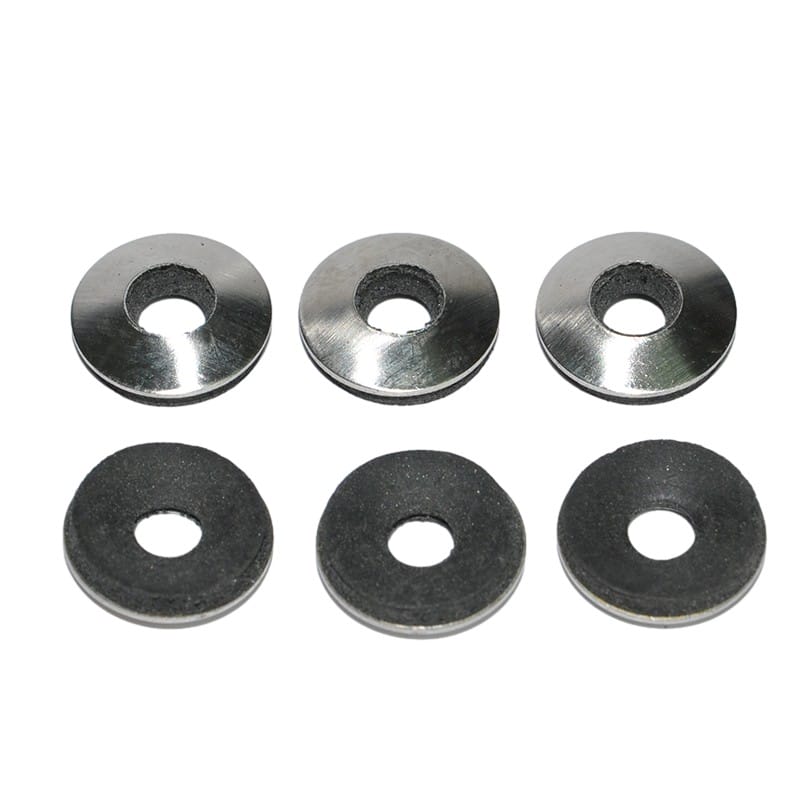 Jiaxing Aoke – Reliable Supplier of High-Performance EPDM Bonded Washers2026/07/10
Featuring prominent advantages such as aging resistance, high and low temperature resistance, water and vapor resistance, high resilience and ultra-long service life, EPDM bonded washers have become the most widely used and cost-effective sealing consumables for engineering supporting applications. ......