


Call Us
+86-573-83601567
Email Us
info@aoketrade.com

HOW TO DEAL WITH STRIPPED SCREW HEADS?
1. Increase friction
Place double-sided adhesive tape, non-woven fabric or paper under the screwdriver bit. This increases friction, making it easier to tighten the screw. However, be careful not to use anything too thick, as this may prevent the screw from entering the hole fully.
2. Use Adhesive
If the screw hole is too large or the screw is noticeably loose, try using adhesive to secure it. Inject a suitable amount of adhesive into the screw hole, then screw the screw in. Once the adhesive has set, use needle-nose pliers to unscrew it.
3. Soldering
For screws made of special materials such as stainless steel or aluminium alloy, consider using solder. Drip molten solder from the tip of a soldering iron onto the screwdriver and the screw, then allow it to cool before attempting to unscrew the screw. Please note that this method requires a certain level of technical skill and practical experience.
4. Repairing the Threaded Hole
If the threads in the hole are severely worn, a thread repair tool can be used. Insert the repair tool or tap into the hole and turn it clockwise until it is fully seated, then attempt to screw in a screw of the appropriate size. If the screw still slips, try other methods.
5. Thread Compound and Locking Compound
Use thread compound or locking compound to fill the gaps between the screw hole and the screw threads, thereby increasing friction and preventing stripped threads. Apply the material to the screw hole and the screw threads, then tighten the screw.
6. Reverse Tap Method
If the screw is severely stripped and cannot be resolved using standard methods, try using a reverse tap. First, use an electric drill to create a pattern on the screw head, then screw in the reverse tap to easily unscrew the screw. However, please note that using a reverse tap requires a certain level of skill and experience.
7. Preventative Measures – Threadlocker
To prevent stripped threads, apply threadlocker during installation. This adhesive forms a strong bond between the screw and the threaded hole, increasing friction and resistance to loosening. Apply as normal and ensure the screw is tightened securely to effectively prevent stripped threads.
8. Converting to a Slotted Screw
Use a file or a small flat-head screwdriver to repeatedly score the screw until the Phillips head is converted to a slotted head. The screw can then be removed; this process takes approximately ten to fifteen minutes.
Previous:Labour Day Holiday Notice
Send Inquiry



X
We use cookies to offer you a better browsing experience, analyze site traffic and personalize content. By using this site, you agree to our use of cookies.
Privacy Policy
News
 Guide to Selecting Fastener Materials: Material Determines Performance, Heat Treatment Determines Strength, and Surface Treatment Determines Service Life!2026/07/13
A single sentence that captures the essence of the fastener industry: Choose the wrong material, and even the strongest fastener will break; Choose the wrong heat treatment, and even the highest-rated fastener is merely a false claim; Choose the wrong surface treatment, and even the best screw wi......
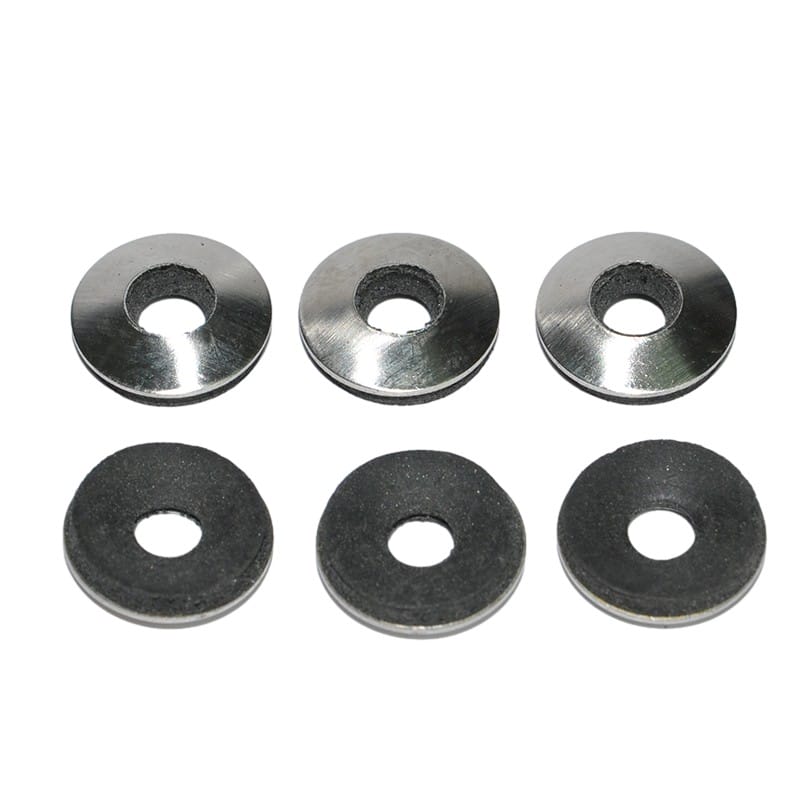 Jiaxing Aoke – Reliable Supplier of High-Performance EPDM Bonded Washers2026/07/10
Featuring prominent advantages such as aging resistance, high and low temperature resistance, water and vapor resistance, high resilience and ultra-long service life, EPDM bonded washers have become the most widely used and cost-effective sealing consumables for engineering supporting applications. ......