


Call Us
+86-573-83601567
Email Us
info@aoketrade.com

What is Thread Rolling?
Thread rolling is a manufacturing process that employs forming rollers to induce plastic deformation in the workpiece, thereby creating threads. Unlike cutting methods, it does not form the required profile by removing metal; instead, it creates threads as the mirror image of the thread rolling die. This constitutes a non-cutting thread forming process.
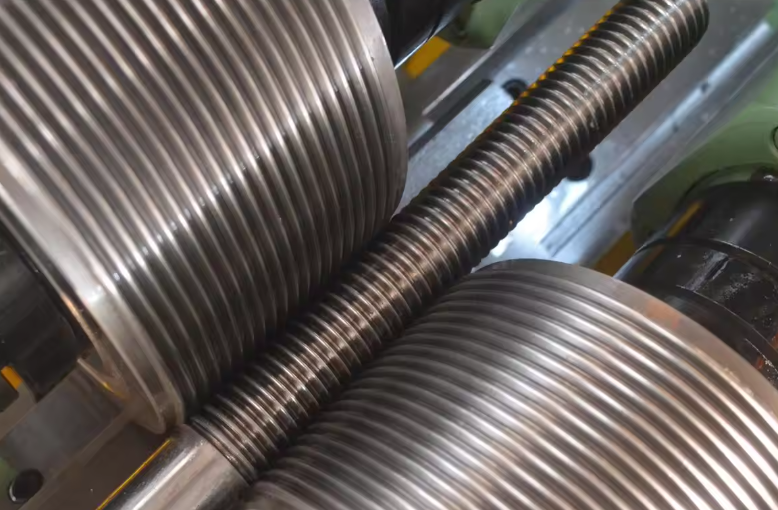
During the rolling operation, the rolling dies compress and displace the base material of the workpiece, imprinting the thread profile onto the blank's surface. Under the action of the rollers, material at the thread root undergoes displacement. This material is radially and axially extruded from the root position, ultimately forming a complete thread contour on the workpiece blank.
Rolling is predominantly employed for external thread production. Prior to processing, the blank's diameter should broadly match the thread's mean diameter. For high-precision threads, determining the blank diameter requires consideration of material properties and process trial results. An excessively small diameter prevents material from fully filling the die cavity, while an overly large diameter imposes additional stress on the rollers and roller frame, potentially damaging the rolling equipment under severe conditions.
Currently, rolled threads predominantly feature a 60° thread angle, with the mating roll teeth designed with a sharp profile, often incorporating a rounded cutting edge to facilitate superior material penetration. Each roll tooth exhibits 30° bevels on both flanks; this angle delivers a controlled and stable force to the material, ensuring it flows along the predetermined axial and radial paths.
The thread rolling process offers distinct advantages. Firstly, the mechanical properties of the resulting threads are significantly enhanced. As the entire process constitutes cold working, the threads exhibit higher tensile strength and superior surface finish compared to those produced by cutting processes. Secondly, the extrusion action of the rollers causes the workpiece blank to elongate naturally. Compared to turning or cutting processes, material utilisation can be improved by 15% to 20%. In mass production, this significantly reduces raw material consumption costs.
Send Inquiry



X
We use cookies to offer you a better browsing experience, analyze site traffic and personalize content. By using this site, you agree to our use of cookies.
Privacy Policy
News
 Guide to Selecting Fastener Materials: Material Determines Performance, Heat Treatment Determines Strength, and Surface Treatment Determines Service Life!2026/07/13
A single sentence that captures the essence of the fastener industry: Choose the wrong material, and even the strongest fastener will break; Choose the wrong heat treatment, and even the highest-rated fastener is merely a false claim; Choose the wrong surface treatment, and even the best screw wi......
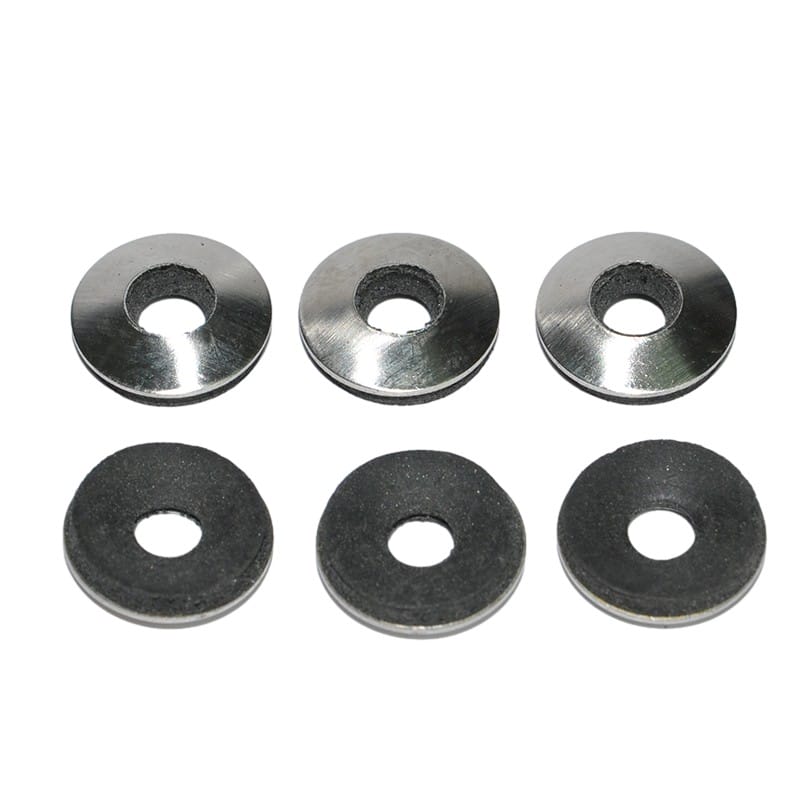 Jiaxing Aoke – Reliable Supplier of High-Performance EPDM Bonded Washers2026/07/10
Featuring prominent advantages such as aging resistance, high and low temperature resistance, water and vapor resistance, high resilience and ultra-long service life, EPDM bonded washers have become the most widely used and cost-effective sealing consumables for engineering supporting applications. ......