


Call Us
+86-573-83601567
Email Us
info@aoketrade.com

External Hex Bolt or Internal Hex Bolt?
Hexagon head bolts are a common type of fastener. Compared to flat-head or Phillips-head bolts, they are less prone to stripping during assembly and can withstand higher torque. Hexagon head bolts can be categorised into two types: external hex bolts and Internal hex bolts. So what distinguishes these two types?
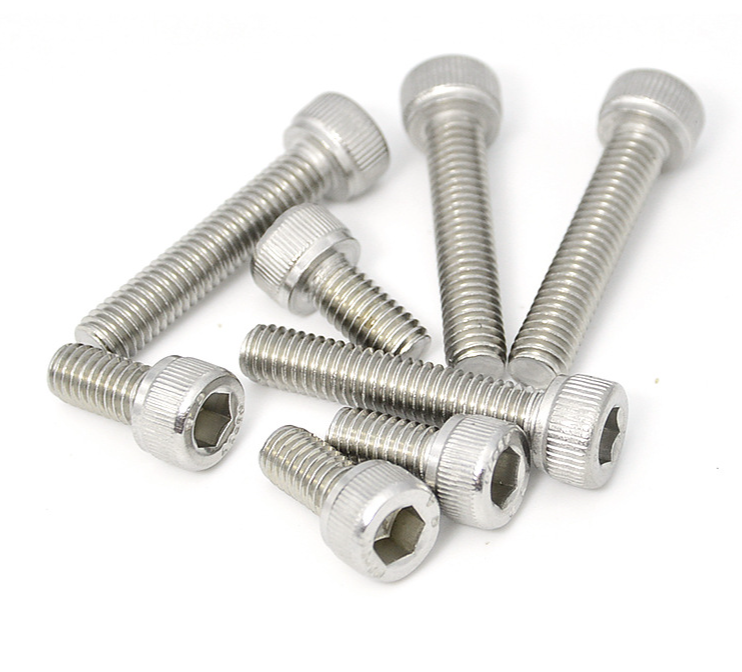
Structurally, external hex bolts feature a raised hexagonal head without any recess. To increase the head's bearing surface area, they can be manufactured as external hex flange bolts, a variant with widespread application. Internal hex bolts have a circular outer head with a recessed hexagon at the centre, commonly available in cylindrical, pan-head, countersunk, and flat-head styles.
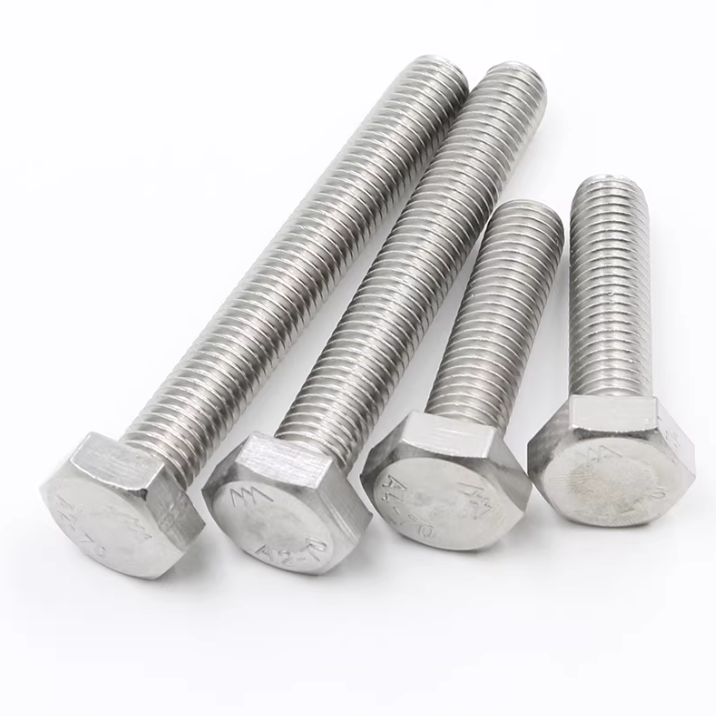
The advantages of external hex bolts are evident: superior self-locking properties, greater contact area between the head and workpiece enabling stronger preload, a wider range of fully threaded lengths available, and the ability to be machined into tapped-hole bolts. They can both secure component positioning and withstand lateral shear forces. Furthermore, their heads are thinner than internal hex bolts, making them irreplaceable in many scenarios. However, external hex bolts have limitations: their protruding heads occupy considerable space, making them unsuitable for compact precision equipment, and they cannot be countersunk.
Internal hex bolts offer easy installation, minimal slippage, and a compact footprint. They can be countersunk directly into the workpiece, providing a neat, unobtrusive appearance that avoids interfering with surrounding components. Requiring specialised wrenches for removal, they offer good anti-theft properties and can withstand considerable loads. However, they also present drawbacks: the small contact area of the head results in lower preload compared to external hex bolts. Beyond a certain length, fully threaded variants become unavailable. Furthermore, they necessitate specialised wrenches, which can be difficult to source. There is a higher risk of stripping threads during tightening, making component replacement troublesome and routine disassembly inconvenient.
The external hex bolts and internal hex bolts hinges primarily on installation space and torque requirements. Opt for external hex bolts where ample installation space is available and high torque fastening is needed. Conversely, select internal hex bolts for confined installation areas, where a flush-head appearance is desired, and where torque demands are not stringent.
Send Inquiry



X
We use cookies to offer you a better browsing experience, analyze site traffic and personalize content. By using this site, you agree to our use of cookies.
Privacy Policy
News
 Guide to Selecting Fastener Materials: Material Determines Performance, Heat Treatment Determines Strength, and Surface Treatment Determines Service Life!2026/07/13
A single sentence that captures the essence of the fastener industry: Choose the wrong material, and even the strongest fastener will break; Choose the wrong heat treatment, and even the highest-rated fastener is merely a false claim; Choose the wrong surface treatment, and even the best screw wi......
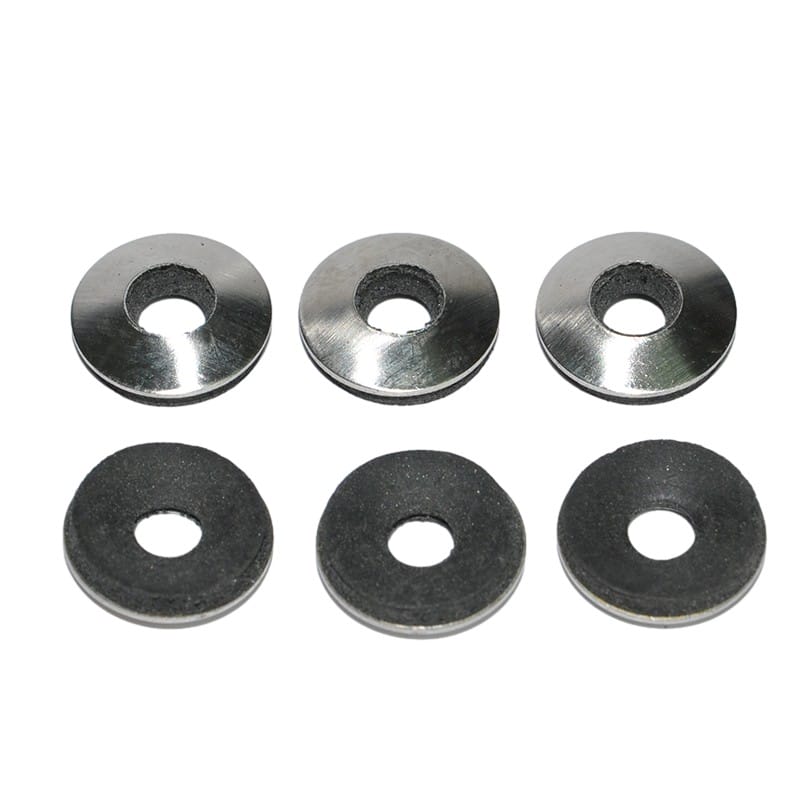 Jiaxing Aoke – Reliable Supplier of High-Performance EPDM Bonded Washers2026/07/10
Featuring prominent advantages such as aging resistance, high and low temperature resistance, water and vapor resistance, high resilience and ultra-long service life, EPDM bonded washers have become the most widely used and cost-effective sealing consumables for engineering supporting applications. ......