


Call Us
+86-573-83601567
Email Us
info@aoketrade.com

How to Select Self-Tapping Screws?
Self-tapping screws are a widely used type of fastener, primarily categorized into two mainstream types: carbon steel and stainless steel. Generally, carbon steel self-tapping screws contain no alloying elements and are significantly less expensive than stainless steel variants. They offer higher physical strength and can withstand greater tightening forces. However, carbon steel has a notable drawback: poor corrosion resistance, making it prone to rusting in humid or corrosive environments. Stainless steel self-tapping screws, on the other hand, contain high alloy content and are priced higher. They offer exceptional corrosion resistance, resist rusting, and can withstand various complex and harsh environments, resulting in a longer service life.
Self-tapping screws feature diverse classification dimensions. Common types include Phillips pan-head self-tapping screws, standard pan-head self-tapping screws, and Phillips countersunk self-tapping screws. Additionally, they are categorized by tip characteristics into drill-point, flat-point, and pointed-tip self-tapping screws, as well as triangular-thread locking self-tapping screws with locking functionality. Each category's structural design caters to distinct installation scenarios and fastening requirements.
How to Select Self-Tapping Screws?
If construction budgets are limited and the usage environment is dry with no special requirements for screw longevity or rust resistance, opt for cost-effective carbon steel self-tapping screws. For humid, salt-fog, or corrosive environments where rust prevention and service life are priorities, prioritize corrosion-resistant stainless steel self-tapping screws.
Send Inquiry



X
We use cookies to offer you a better browsing experience, analyze site traffic and personalize content. By using this site, you agree to our use of cookies.
Privacy Policy
News
 Guide to Selecting Fastener Materials: Material Determines Performance, Heat Treatment Determines Strength, and Surface Treatment Determines Service Life!2026/07/13
A single sentence that captures the essence of the fastener industry: Choose the wrong material, and even the strongest fastener will break; Choose the wrong heat treatment, and even the highest-rated fastener is merely a false claim; Choose the wrong surface treatment, and even the best screw wi......
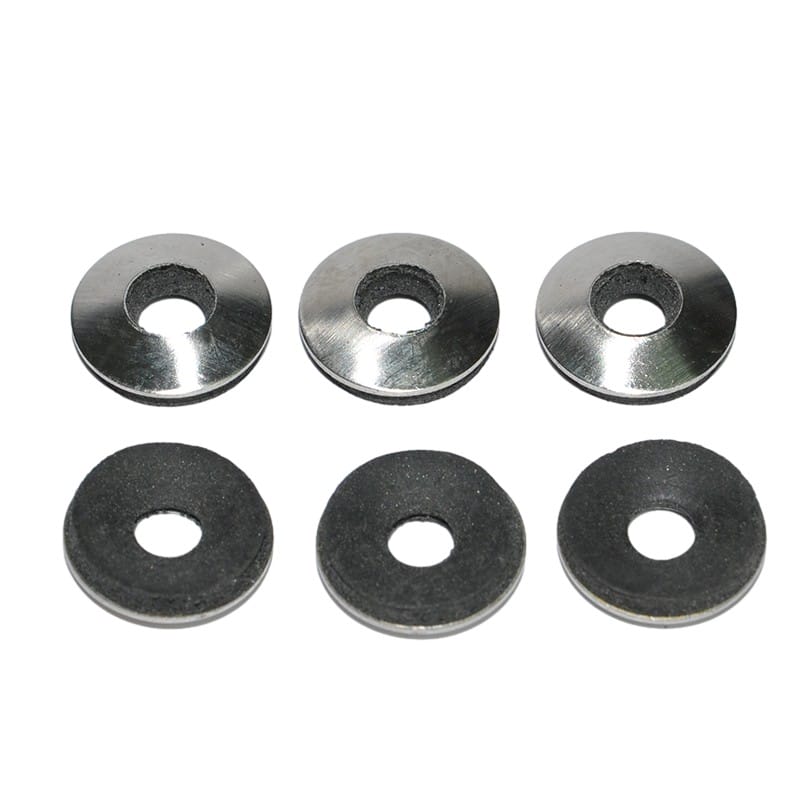 Jiaxing Aoke – Reliable Supplier of High-Performance EPDM Bonded Washers2026/07/10
Featuring prominent advantages such as aging resistance, high and low temperature resistance, water and vapor resistance, high resilience and ultra-long service life, EPDM bonded washers have become the most widely used and cost-effective sealing consumables for engineering supporting applications. ......