


Call Us
+86-573-83601567
Email Us
info@aoketrade.com

Why Do Your Galvanised Screws Rust?
Many assume galvanised screws possess inherent rust-proof properties, yet they still corrode during use. What exactly is happening? In truth, the zinc coating serves merely as a protective “outer layer” for the screw, not a universal shield. Rust formation is largely linked to the condition of the coating and the usage environment.
The rust-proofing principle of galvanised screws relies on the surface zinc coating to isolate the carbon steel substrate from air and moisture, thereby preventing oxidation. However, this zinc layer is brittle and prone to damage. Improper tooling during installation can scratch the coating, while impacts and friction during transport or storage may also compromise the surface. Once the substrate is exposed, it rapidly reacts with external corrosive agents, gradually developing rust.
Concurrently, the usage environment significantly influences corrosion susceptibility. In dry indoor settings, galvanised screws may remain stable for years. Conversely, outdoor environments with high humidity and rainfall, coastal locations with salt spray, or industrial settings featuring high acid or alkali concentrations can cause rapid erosion of the zinc coating.
The final cause of rust lies with the galvanised screw manufacturer. If the manufacturer's technology is substandard, the screws will rust easily. As a company deeply rooted in the fastener industry, Jiaxing Aoke employs premium hot-dip galvanising processes for our screws, creating a dense, robust zinc coating with strong adhesion. We welcome your enquiries and orders!
To minimise rusting, avoid scratching the surface during installation. For outdoor or corrosive environments, prioritise hot-dip galvanised screws and use rust inhibitors where necessary. Should white rust appear, prompt treatment can delay corrosion. Red rust indicates base material corrosion; replace immediately to prevent compromised connection stability.
Previous:How to Select Self-Tapping Screws?
Send Inquiry



X
We use cookies to offer you a better browsing experience, analyze site traffic and personalize content. By using this site, you agree to our use of cookies.
Privacy Policy
News
 Guide to Selecting Fastener Materials: Material Determines Performance, Heat Treatment Determines Strength, and Surface Treatment Determines Service Life!2026/07/13
A single sentence that captures the essence of the fastener industry: Choose the wrong material, and even the strongest fastener will break; Choose the wrong heat treatment, and even the highest-rated fastener is merely a false claim; Choose the wrong surface treatment, and even the best screw wi......
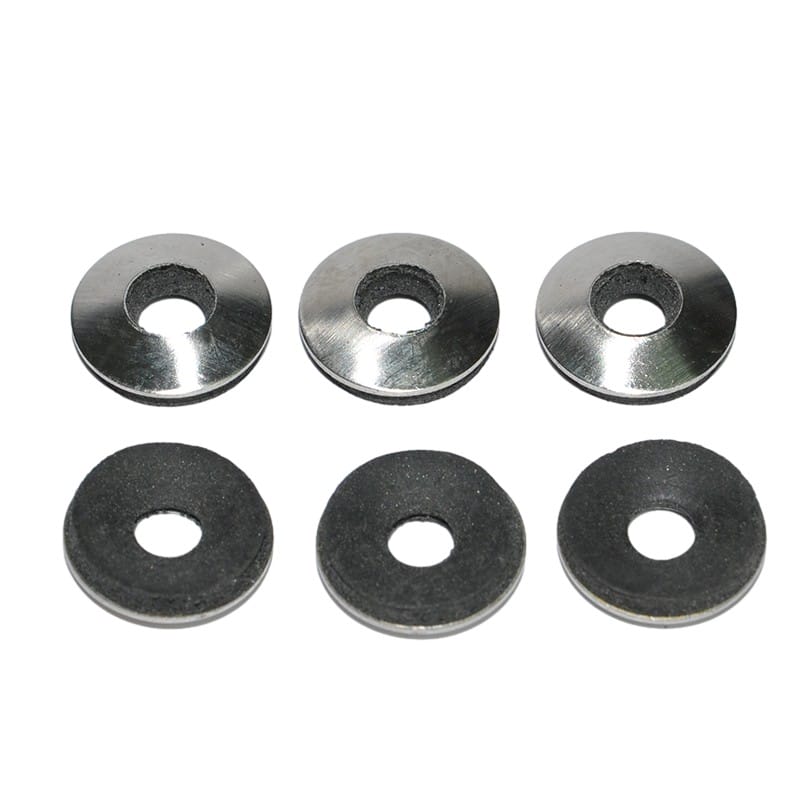 Jiaxing Aoke – Reliable Supplier of High-Performance EPDM Bonded Washers2026/07/10
Featuring prominent advantages such as aging resistance, high and low temperature resistance, water and vapor resistance, high resilience and ultra-long service life, EPDM bonded washers have become the most widely used and cost-effective sealing consumables for engineering supporting applications. ......