


Call Us
+86-573-83601567
Email Us
info@aoketrade.com

Why does the performance of adhesive-coated bolts deteriorate?
Adhesive-coated bolts feature a specialized adhesive layer applied to their surface, serving three core functions: fastening, sealing, and anti-loosening. This coating not only enhances the bond between the bolt and the connected component but also isolates external contaminants, improving overall fastening reliability. However, in practical use, the performance of adhesive-coated bolts can easily deteriorate due to external factors. Below are detailed explanations of several key external influencing factors to help mitigate usage risks.
1. Ambient Temperature and Humidity. High temperatures accelerate adhesive layer aging, causing softening, reduced viscosity, and gradual loss of bonding strength and anti-loosening capability. This degradation significantly shortens bolt lifespan, particularly in high-temperature environments like engine peripherals or boiler equipment. In humid environments, the adhesive layer absorbs moisture and expands, disrupting its internal structure. In scenarios like rainy outdoor areas, damp basements, or high-humidity workshops, mold growth on the adhesive layer may further accelerate performance degradation.
2. Corrosion by aggressive media. Exposure to acidic/alkaline solutions, salt spray (e.g., coastal areas), or industrial chemicals corrodes both the adhesive layer and the bolt substrate, causing delamination and cracking. Additional corrosion protection is essential when using adhesive-coated bolts in such environments.
3. Improper installation practices. Uneven force application or misaligned bolts during installation can cause uneven stress distribution, leading to localized over-compression and damage of the adhesive layer. Additionally, failure to control tightening torque according to specifications may result in either crushed adhesive layers or inadequate bonding, both of which pose risks for future performance failure.
4. Vibration and load impact. In machinery, vehicles, wind turbines, and other applications subject to prolonged high-frequency vibration or repeated load impacts, relative displacement between bolts and components causes continuous stretching and compression of the adhesive layer. This induces fatigue cracks, leading to gradual aging, delamination, and loss of both anti-loosening and sealing functions.
Previous:Why Do Your Galvanised Screws Rust?
Send Inquiry



X
We use cookies to offer you a better browsing experience, analyze site traffic and personalize content. By using this site, you agree to our use of cookies.
Privacy Policy
News
 Guide to Selecting Fastener Materials: Material Determines Performance, Heat Treatment Determines Strength, and Surface Treatment Determines Service Life!2026/07/13
A single sentence that captures the essence of the fastener industry: Choose the wrong material, and even the strongest fastener will break; Choose the wrong heat treatment, and even the highest-rated fastener is merely a false claim; Choose the wrong surface treatment, and even the best screw wi......
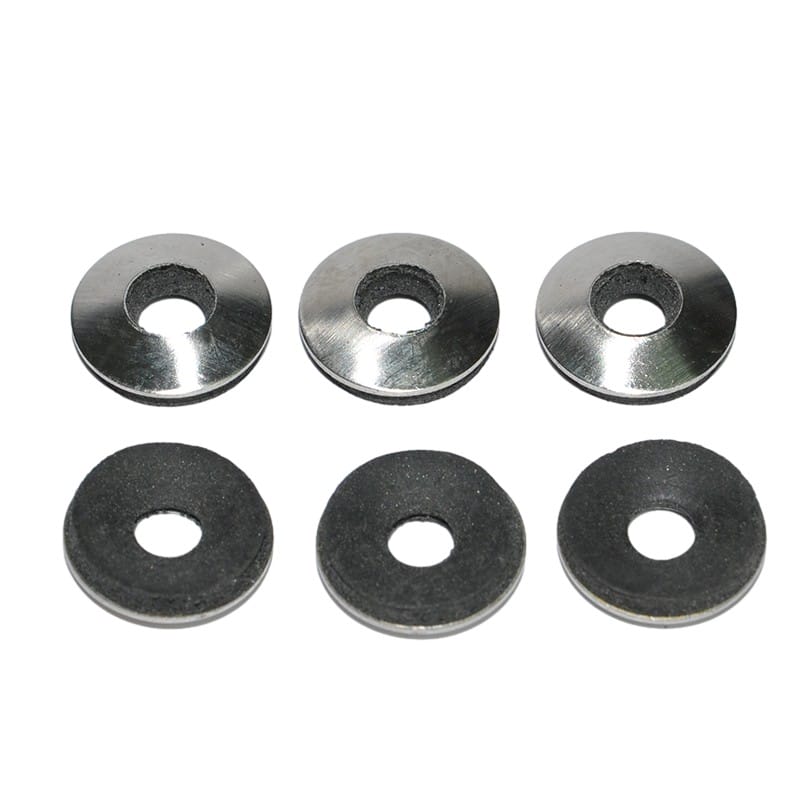 Jiaxing Aoke – Reliable Supplier of High-Performance EPDM Bonded Washers2026/07/10
Featuring prominent advantages such as aging resistance, high and low temperature resistance, water and vapor resistance, high resilience and ultra-long service life, EPDM bonded washers have become the most widely used and cost-effective sealing consumables for engineering supporting applications. ......