


Call Us
+86-573-83601567
Email Us
info@aoketrade.com

Is magnetic attraction in stainless steel screws a quality issue?
Many people habitually use magnets to test stainless steel screws when purchasing or using them, assuming that screws which stick to magnets are substandard. This is actually a common misconception. Magnetic properties in stainless steel screws ≠ quality issues. The core factor depends on the material type and manufacturing process, not purity or quality.
The magnetic properties of stainless steel hinge on its internal crystal structure, primarily falling into two categories. One category is austenitic stainless steel, such as grades 304 and 316. These materials are inherently non-magnetic and represent the most commonly used stainless steel for screws on the market. They emphasize rust resistance and corrosion resistance, making them suitable for humid, outdoor, and similar environments. The other category includes ferritic and martensitic stainless steels, which possess natural magnetic properties. These are often used to manufacture high-strength, wear-resistant screws designed for heavy-duty applications.
Even when using non-magnetic 304 stainless steel, the manufacturing process can induce magnetism in screws. Techniques like cold heading and rolling during production alter the internal crystal structure, converting some austenite into martensite and creating a weak magnetic field. This phenomenon is termed “process-induced magnetism,” which does not compromise the material's inherent rust resistance or mechanical strength and is not a quality defect.
The core criteria for judging stainless steel screw quality are material compliance and manufacturing precision, not magnetism. Inferior screws may use low-grade materials masquerading as 304 or 316, offering poor rust resistance and prone to breakage. Even non-magnetic austenitic screws that fail to meet standards may rust rapidly due to substandard materials.
When selecting screws for everyday use, focus on material suitability for the application rather than magnetic properties: prioritize non-magnetic or weakly magnetic 304/316 screws for humid environments, and opt for magnetic high-strength stainless steel screws for heavy-duty applications. If concerned about material authenticity, consult material test reports instead of relying on a magnet test to avoid missing qualified products due to misconceptions.
Send Inquiry



X
We use cookies to offer you a better browsing experience, analyze site traffic and personalize content. By using this site, you agree to our use of cookies.
Privacy Policy
News
 Guide to Selecting Fastener Materials: Material Determines Performance, Heat Treatment Determines Strength, and Surface Treatment Determines Service Life!2026/07/13
A single sentence that captures the essence of the fastener industry: Choose the wrong material, and even the strongest fastener will break; Choose the wrong heat treatment, and even the highest-rated fastener is merely a false claim; Choose the wrong surface treatment, and even the best screw wi......
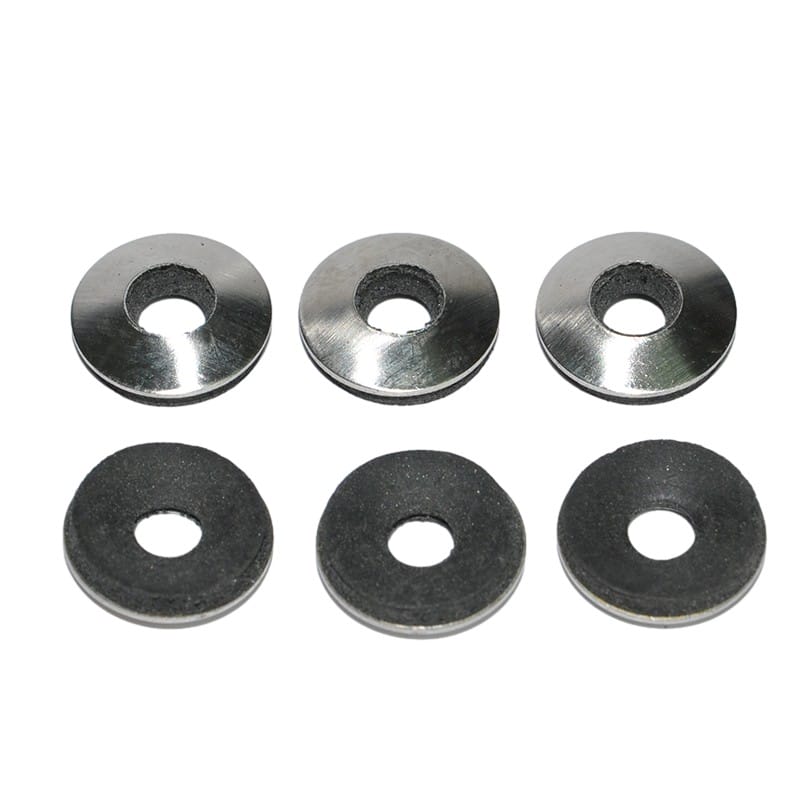 Jiaxing Aoke – Reliable Supplier of High-Performance EPDM Bonded Washers2026/07/10
Featuring prominent advantages such as aging resistance, high and low temperature resistance, water and vapor resistance, high resilience and ultra-long service life, EPDM bonded washers have become the most widely used and cost-effective sealing consumables for engineering supporting applications. ......