


Call Us
+86-573-83601567
Email Us
info@aoketrade.com

Complete Guide to Installing and Removing Expansion Bolts
Expansion bolts are widely used basic fasteners that achieve stable fixation through friction grip generated by wedge angles. Common materials include carbon steel and stainless steel, which are durable but may still rust over time. Below is a detailed explanation of the installation steps for expansion bolts, along with efficient methods for removing rusted ones—practical and easy to follow.
I. Installation Steps for Stainless Steel Expansion Bolts
1. Drill a hole matching the expansion sleeve's outer diameter using an electric drill. For softer wall tiles, use a slightly smaller drill bit. After drilling, insert the expansion bolt assembly into the hole, leaving the nut unfastened to prevent the bolt from falling into the deep hole and becoming difficult to retrieve.
2. After securing the expansion bolt position, unscrew the nut. Align the mounting holes of the object to be fixed with the bolt, then install the spring washer and flat washer in sequence. Finally, tighten the nut. Ensure the expansion sleeve is fully embedded into the wall—the deeper the sleeve is embedded, the more secure the fixation.
II. Removal Method for Rusted Stainless Steel Expansion Bolts
1. Vibration
Never forcefully twist rusted screws. First, gently tap the wrench handle with a hammer. The vibration loosens rust buildup between the screw and nut, preventing breakage or jamming from direct force. Attempt to turn after vibration.
2. Striking
Directly strike the rusted nut with a hammer to loosen the rust layer and its grip. If ineffective, strike the nut in a circular pattern around its circumference. Once sufficiently loosened, the nut should come off easily.
3. Heating
For severely rusted screws, thoroughly heat the screw with an oxyacetylene torch flame. Utilizing thermal expansion and contraction, immediately drip lubricating oil onto the red-hot screw. This causes rapid contraction, widening the gap with the nut. Once the oil penetrates, the nut can be unscrewed smoothly.
4. Welding
If the screw head is broken off, avoid drilling holes (which may damage the threaded hole). Instead, weld a long iron rod of matching diameter onto the broken thread. Rotate the iron rod to pull out the broken thread.
5. Impact Method
For screws with corroded or deformed heads that cannot be operated with a wrench, use a hammer and flat punch to vertically strike the head, creating a V-shaped groove. Adjust the punch angle to align with the desired extraction direction and strike. Once loosened, use pliers to twist the screw out.
Send Inquiry



X
We use cookies to offer you a better browsing experience, analyze site traffic and personalize content. By using this site, you agree to our use of cookies.
Privacy Policy
News
 Guide to Selecting Fastener Materials: Material Determines Performance, Heat Treatment Determines Strength, and Surface Treatment Determines Service Life!2026/07/13
A single sentence that captures the essence of the fastener industry: Choose the wrong material, and even the strongest fastener will break; Choose the wrong heat treatment, and even the highest-rated fastener is merely a false claim; Choose the wrong surface treatment, and even the best screw wi......
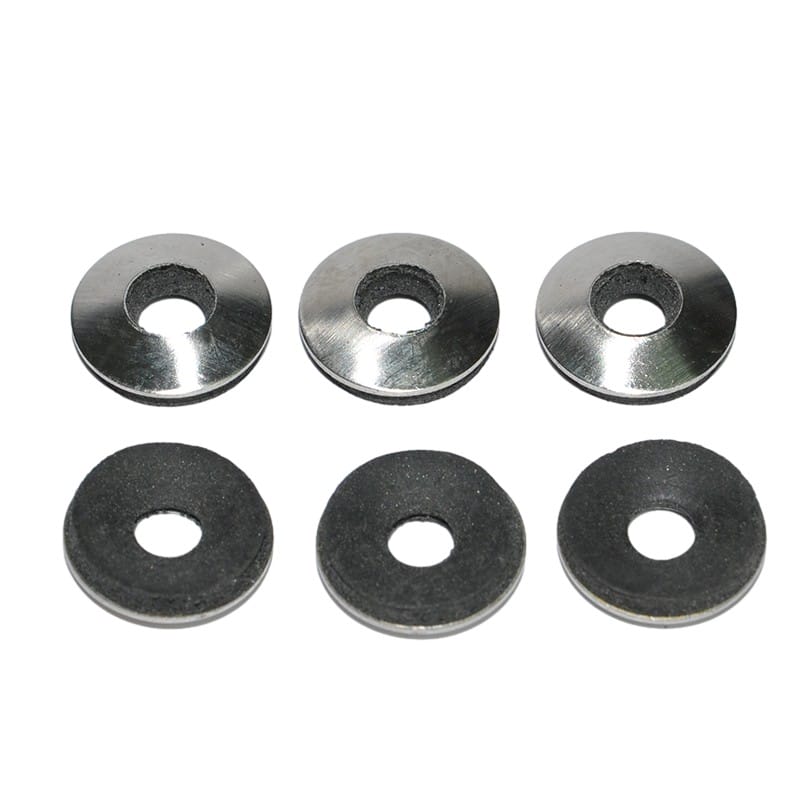 Jiaxing Aoke – Reliable Supplier of High-Performance EPDM Bonded Washers2026/07/10
Featuring prominent advantages such as aging resistance, high and low temperature resistance, water and vapor resistance, high resilience and ultra-long service life, EPDM bonded washers have become the most widely used and cost-effective sealing consumables for engineering supporting applications. ......