


Call Us
+86-573-83601567
Email Us
info@aoketrade.com

How to Choose the Right Rivets
Rivets are commonly used non-removable fasteners, but many people tend to follow trends blindly when selecting them. This often leads to poor compatibility, shortened service life, and even potential hazards like loosening or detachment. Below is a guide on how to properly choose rivets.
Select the material based on your usage environment. For everyday dry indoor applications, standard carbon steel rivets are sufficient. offering high cost-effectiveness for basic fastening needs. For damp, outdoor, or mildly corrosive environments, prioritize galvanized rivets—their zinc coating provides effective rust prevention. In highly corrosive settings like coastal areas or chemical plants, opt for stainless steel rivets (304 or 316 grades) for superior rust resistance and corrosion endurance, preventing failure due to long-term rusting.
Select the type based on your connection scenario. The most common flat round-head rivets feature a rounded head that protrudes above the surface after installation, suitable for applications with minimal flatness requirements like wooden crates or sheet metal connections. Countersunk rivets have a tapered head that sits flush with the surface after installation, offering a clean, snag-free appearance ideal for decorative panels or instrument housings. Blind rivets (pop rivets) require no specialized tools and can be installed with one hand, making them suitable for scenarios where access from both sides is difficult, such as pipe connections or enclosed enclosures. Half-round head rivets distribute stress evenly and offer strong vibration resistance, making them ideal for heavy-duty, high-vibration applications like mechanical equipment mounts.
Select specifications based on your components—mismatched sizes directly compromise fastening effectiveness. Rivet length should slightly exceed the total thickness of connected parts to ensure full deformation and locking during installation. Rivet diameter must match component thickness and load-bearing requirements: thicker components or heavier loads necessitate larger diameters to prevent weak connections from undersized rivets.
Send Inquiry



X
We use cookies to offer you a better browsing experience, analyze site traffic and personalize content. By using this site, you agree to our use of cookies.
Privacy Policy
News
 Guide to Selecting Fastener Materials: Material Determines Performance, Heat Treatment Determines Strength, and Surface Treatment Determines Service Life!2026/07/13
A single sentence that captures the essence of the fastener industry: Choose the wrong material, and even the strongest fastener will break; Choose the wrong heat treatment, and even the highest-rated fastener is merely a false claim; Choose the wrong surface treatment, and even the best screw wi......
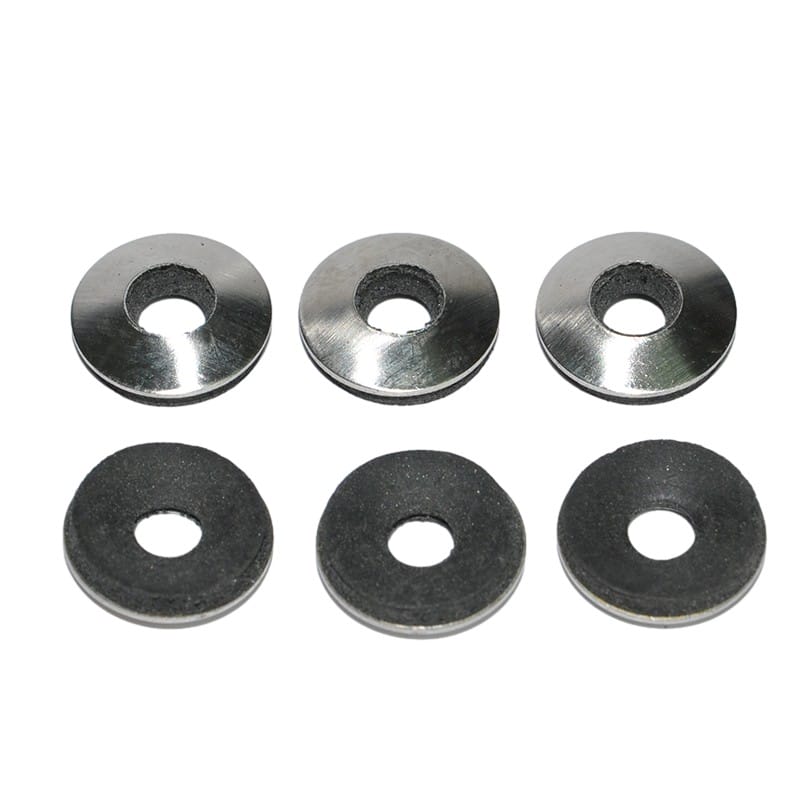 Jiaxing Aoke – Reliable Supplier of High-Performance EPDM Bonded Washers2026/07/10
Featuring prominent advantages such as aging resistance, high and low temperature resistance, water and vapor resistance, high resilience and ultra-long service life, EPDM bonded washers have become the most widely used and cost-effective sealing consumables for engineering supporting applications. ......