


Call Us
+86-573-83601567
Email Us
info@aoketrade.com

Why Do Stainless Steel Screws Rust?
Rusting is a common issue encountered during the practical use of stainless steel fasteners. This not only affects product appearance but also reduces the screws' performance and structural reliability. Therefore, when selecting and installing stainless steel screws, it is essential to understand the correct usage guidelines to proactively mitigate corrosion risks.
1. In high chloride environments such as coastal areas, salt spray, chlorine-based disinfectants, or swimming pools, chloride ions continuously erode the protective passivation layer on stainless steel surfaces. This loss of rust resistance makes the material prone to corrosion.
2. In persistently damp, waterlogged, dark, or poorly ventilated conditions, the stainless steel surface cannot adequately interact with oxygen to form a stable protective layer. Corrosive agents readily adhere and trigger rust formation.
3. In chemical environments like strong acids, strong alkalis, chemical gases, or corrosive cleaning agents, the stainless steel surface undergoes continuous erosion. The passivation layer is destroyed, leading to rust formation.
4. When the stainless steel surface has scratches, damage, or contamination from iron filings, carbon steel tools, or rusty water, electrochemical corrosion occurs. This readily produces rust spots that spread rapidly.
Send Inquiry



X
We use cookies to offer you a better browsing experience, analyze site traffic and personalize content. By using this site, you agree to our use of cookies.
Privacy Policy
News
 Guide to Selecting Fastener Materials: Material Determines Performance, Heat Treatment Determines Strength, and Surface Treatment Determines Service Life!2026/07/13
A single sentence that captures the essence of the fastener industry: Choose the wrong material, and even the strongest fastener will break; Choose the wrong heat treatment, and even the highest-rated fastener is merely a false claim; Choose the wrong surface treatment, and even the best screw wi......
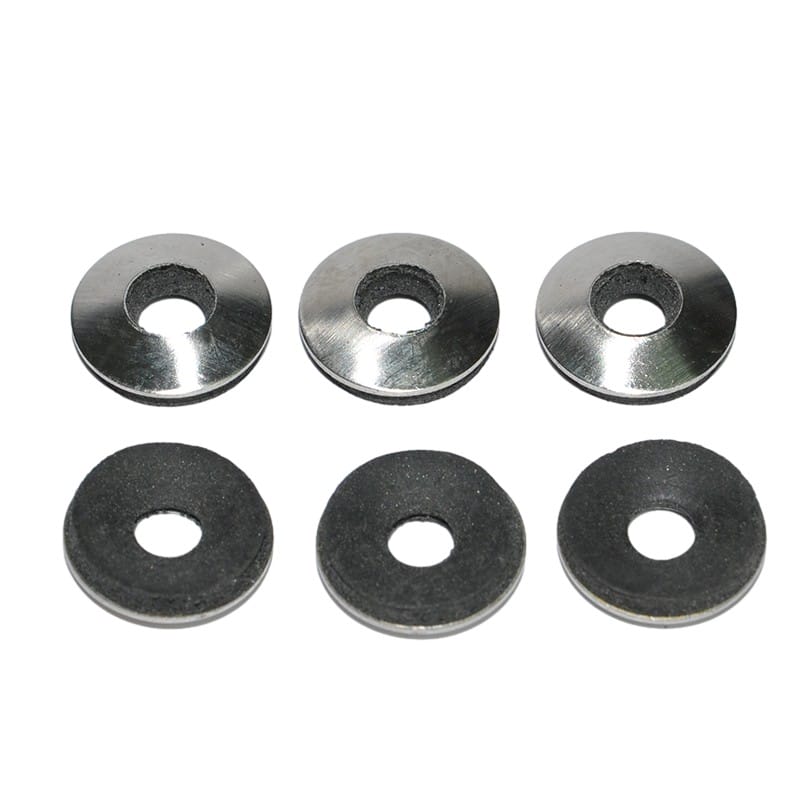 Jiaxing Aoke – Reliable Supplier of High-Performance EPDM Bonded Washers2026/07/10
Featuring prominent advantages such as aging resistance, high and low temperature resistance, water and vapor resistance, high resilience and ultra-long service life, EPDM bonded washers have become the most widely used and cost-effective sealing consumables for engineering supporting applications. ......