


Call Us
+86-573-83601567
Email Us
info@aoketrade.com

Can chemical solutions and magnets be used to quickly identify the authenticity of stainless steel fasteners?
Currently, two common methods for rapid testing of stainless steel authenticity exist on the market: chemical solution testing and magnet testing.
The chemical solution test involves applying stainless steel testing solution to the surface of the fastener. After 2–3 minutes, the material's authenticity is determined by observing any color change—no change indicates genuine stainless steel. The magnet test relies on whether the fastener is attracted to a magnet: attraction signifies counterfeit, while no attraction indicates genuine material.
Extensive verification and comparative testing have shown that neither method possesses scientific validity.
1. The chemical solutions used in this test vary widely in type and composition, lacking uniform qualitative standards. Experimental conditions and judgment criteria differ significantly, making accurate material identification difficult. Our team, through years of practice, has repeatedly compared chemical solution test results with spectrometer chemical composition analyses. This has confirmed significant errors in chemical solution testing, rendering it inaccurate and unscientific.
2. Stainless steel fasteners exhibit weak magnetism after cold heading processes. Even after demagnetization treatment, they can achieve a non-magnetic state. Therefore, relying solely on magnet attraction to determine stainless steel authenticity is also inaccurate.
Consequently, the most accurate and scientific method for authenticating stainless steel fastener materials remains chemical composition analysis using standardized instruments.
Previous:Why Do Stainless Steel Screws Rust?
Send Inquiry



X
We use cookies to offer you a better browsing experience, analyze site traffic and personalize content. By using this site, you agree to our use of cookies.
Privacy Policy
News
 Guide to Selecting Fastener Materials: Material Determines Performance, Heat Treatment Determines Strength, and Surface Treatment Determines Service Life!2026/07/13
A single sentence that captures the essence of the fastener industry: Choose the wrong material, and even the strongest fastener will break; Choose the wrong heat treatment, and even the highest-rated fastener is merely a false claim; Choose the wrong surface treatment, and even the best screw wi......
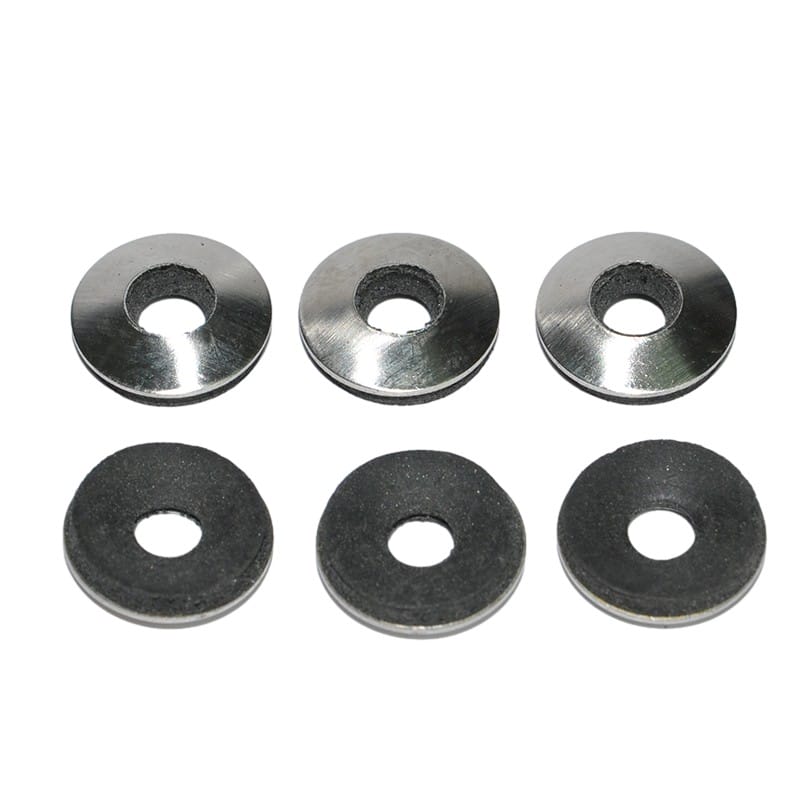 Jiaxing Aoke – Reliable Supplier of High-Performance EPDM Bonded Washers2026/07/10
Featuring prominent advantages such as aging resistance, high and low temperature resistance, water and vapor resistance, high resilience and ultra-long service life, EPDM bonded washers have become the most widely used and cost-effective sealing consumables for engineering supporting applications. ......