


Call Us
+86-573-83601567
Email Us
info@aoketrade.com

Performance Comparison of Martensitic and Austenitic Screws
In the wide-ranging applications of industrial fasteners, martensitic stainless steel screws and austenitic stainless steel screws have become essential choices for various operating conditions due to their unique physical and chemical properties. Correctly distinguishing and understanding the characteristics of these two materials is of critical importance for ensuring the safety, stability, and long-term reliability of engineering projects.
I. Detailed Analysis of Material Properties
- Martensitic screws are primarily characterized by their ability to achieve high strength and hardness through heat treatment. Martensitic stainless steel contains a high proportion of chromium, and some grades also incorporate alloying elements such as molybdenum and nickel to optimize overall performance. They maintain good strength and hardness even in high-temperature environments, making them suitable for high-temperature and high-stress applications.
- Austenitic screws, on the other hand, are renowned for their excellent corrosion resistance and superior formability. This type of stainless steel contains high levels of chromium and nickel, resulting in a stable microstructure that maintains good performance in various complex environments, particularly in corrosive media such as acidic and alkaline solutions.
II. Performance Comparison
- In terms of strength and hardness, martensitic screws, after undergoing standardized heat treatment, can achieve significantly higher strength and hardness than austenitic screws, making them more suitable for critical connection points subjected to heavy loads and high stress.
- Regarding corrosion resistance, austenitic screws, due to their high-chromium and high-nickel alloy composition, typically possess superior corrosion resistance compared to martensitic screws, making them more suitable for use in operating conditions with severe corrosion environments.
III. Discussion of Application Fields
- Martensitic screws, with their high-temperature resistance and high strength, are widely used in equipment and scenarios with high demands for high-temperature performance and structural strength, such as boilers, steam turbines, and petrochemical equipment.
- Austenitic screws, with their excellent corrosion resistance, are the ideal choice for fields with strict anti-rust and anti-corrosion requirements, such as food processing equipment, seawater treatment systems, medical devices, and coastal facilities.
IV. Processing and Treatment
- Martensitic screws can be strengthened and hardened through heat treatment processes such as quenching and tempering, significantly improving their strength and hardness. However, these materials are generally not suitable for welding, as high temperatures can easily damage their microstructure and mechanical properties.
- Austenitic screws possess good cold working properties and can be formed through processes such as cold rolling, cold drawing, and cold heading, offering greater production flexibility and stronger processing adaptability.
Summary: When selecting between martensitic and austenitic screws in practice, a comprehensive assessment should be made based on specific application requirements, load conditions, and environmental factors. A thorough understanding of the characteristics, differences, and suitable applications of these two materials will help you make more rational and reliable decisions in engineering design, equipment assembly, and fastener selection.
Send Inquiry



X
We use cookies to offer you a better browsing experience, analyze site traffic and personalize content. By using this site, you agree to our use of cookies.
Privacy Policy
News
 Guide to Selecting Fastener Materials: Material Determines Performance, Heat Treatment Determines Strength, and Surface Treatment Determines Service Life!2026/07/13
A single sentence that captures the essence of the fastener industry: Choose the wrong material, and even the strongest fastener will break; Choose the wrong heat treatment, and even the highest-rated fastener is merely a false claim; Choose the wrong surface treatment, and even the best screw wi......
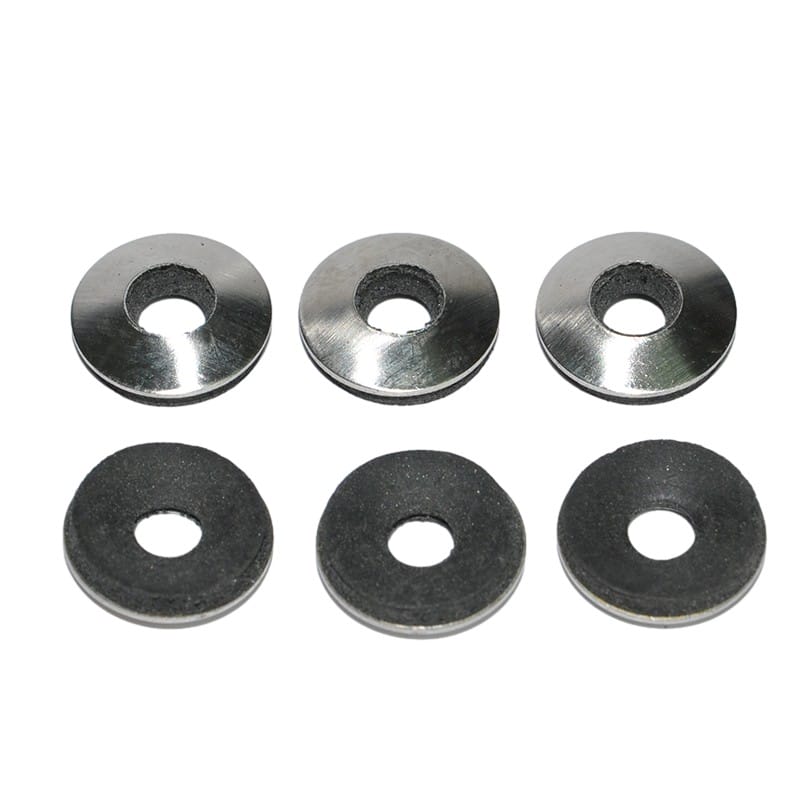 Jiaxing Aoke – Reliable Supplier of High-Performance EPDM Bonded Washers2026/07/10
Featuring prominent advantages such as aging resistance, high and low temperature resistance, water and vapor resistance, high resilience and ultra-long service life, EPDM bonded washers have become the most widely used and cost-effective sealing consumables for engineering supporting applications. ......