


Call Us
+86-573-83601567
Email Us
info@aoketrade.com

How to Address Stripped Screw Threads?
The primary causes of stripped screw threads typically include excessive torque, improper thread matching, eccentric loading, soft material, or repeated disassembly and reassembly. To effectively reduce failure rates and secondary damage, standardized procedures should be followed across four stages: source prevention, on-site handling, thread hole repair, and long-term reinforcement.
During source prevention, strictly adhere to specified torque values based on screw specifications and material during assembly. Never exceed torque limits to prevent thread deformation. Use screws and nuts with consistent precision and intact thread profiles, ensuring adequate engagement length and centered loading to avoid unilateral stress or skewed fastening.
If minor stripping occurs, immediately cease forced tightening. Prioritize replacing the screw with a new one of the same specification. Install a flat washer to distribute stress appropriately, adjust the tightening angle, and apply gentle force during assembly to prevent further wear and enlargement of the stripped area.
For stripped thread holes, select appropriate repair solutions based on damage severity: - Minor stripping: Re-tap with a matching tap to restore thread profile. - Moderate stripping: Reinforce with steel thread inserts, thread sleeves, or self-tapping inserts to restore locking strength. - Severe stripping (unrepairable): Promptly replace the base material or threaded base.
During the long-term reinforcement and selection optimization phase, choose locking structures based on operating conditions—such as nylon lock nuts, all-metal lock nuts, thread-locking compounds, or counter nuts—to enhance vibration resistance and anti-loosening capabilities. In high-vibration or alternating-load environments, prioritize high-strength fasteners.
Send Inquiry



X
We use cookies to offer you a better browsing experience, analyze site traffic and personalize content. By using this site, you agree to our use of cookies.
Privacy Policy
News
 Guide to Selecting Fastener Materials: Material Determines Performance, Heat Treatment Determines Strength, and Surface Treatment Determines Service Life!2026/07/13
A single sentence that captures the essence of the fastener industry: Choose the wrong material, and even the strongest fastener will break; Choose the wrong heat treatment, and even the highest-rated fastener is merely a false claim; Choose the wrong surface treatment, and even the best screw wi......
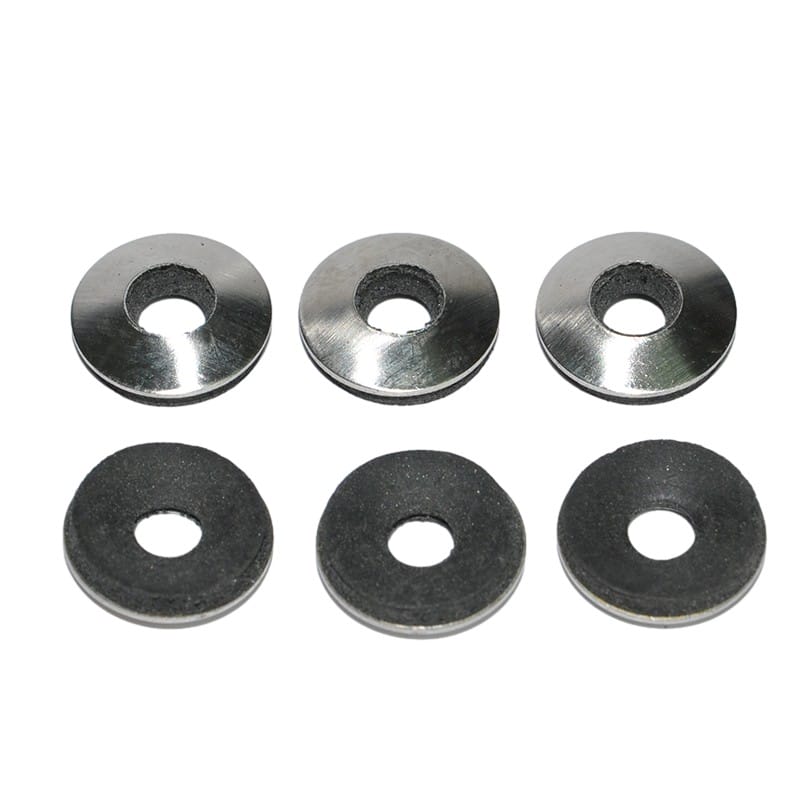 Jiaxing Aoke – Reliable Supplier of High-Performance EPDM Bonded Washers2026/07/10
Featuring prominent advantages such as aging resistance, high and low temperature resistance, water and vapor resistance, high resilience and ultra-long service life, EPDM bonded washers have become the most widely used and cost-effective sealing consumables for engineering supporting applications. ......