


Call Us
+86-573-83601567
Email Us
info@aoketrade.com

A Complete Guide to Bolts and Nuts
The parameters that must be specified when describing fasteners include: product name (standard), size, material, strength grade, and surface treatment.
1. Product Name (Standard)
The screw designation is the most standard and standardized way to refer to a screw. It is composed of elements such as head shape, slot type, strength grade, and material—for example, Phillips head machine screws or Grade 12.9 hex socket head cap screws. Simply put, an accurate screw designation allows others to immediately understand exactly which screw you need, preventing mix-ups. For screws without a standard designation, they are considered non-standard parts and require a drawing.
2. Specifications
Common metric sizes include: M2, M3, M4, M5, M6, M8, M10, M12, etc.; common American sizes include: #4-40, #6-32, #8-32, #10-24, 1/4-20, 5/16-18, 3/8-16, 1/2-13, etc. Screw length refers to the effective length embedded in the workpiece. For example: for countersunk screws, the total length is embedded; for semi-countersunk screws, the length of half the head must be added; whereas for pan-head screws, the length does not include the head dimensions.
3. Materials
Common materials include carbon steel, stainless steel, and alloy steel. Carbon steel is low-cost and offers a wide range of strengths, making it the most commonly used material; stainless steel has excellent rust resistance and is often used in humid or corrosive environments; Alloy steel offers high strength and is often used to manufacture high-strength bolts such as Grade 8.8, Grade 10.9, and Grade 12.9. Additionally, there are non-ferrous metal screws made of copper, aluminum, and other materials, which offer excellent electrical conductivity and corrosion resistance, making them suitable for special operating conditions.
4. Strength Grades
Strength grades primarily refer to carbon steel fasteners. Common strength grades for carbon steel screws include: Grade 4.8, Grade 5.8, Grade 6.8, Grade 8.8, Grade 10.9, and Grade 12.9. Corresponding grades for nuts are: Grade 4, Grade 6, Grade 8, Grade 10, and Grade 12. Generally, screws below Grade 8.8 are classified as standard screws, while those at or above Grade 8.8 are considered high-strength screws.
5. Surface Treatment
Surface treatment is primarily intended to enhance corrosion resistance, though some processes also serve aesthetic purposes. Carbon steel products generally require surface treatment. Common surface treatments include: blackening, galvanizing, copper plating, nickel plating, chrome plating, silver plating, gold plating, Dacromet, and hot-dip galvanizing; There are numerous types of zinc plating, including blue-white zinc, blue zinc, white zinc, yellow zinc, black zinc, and green zinc. These are further categorized as environmentally friendly or non-environmentally friendly, and each grade offers multiple coating thicknesses to meet different salt spray test requirements.
Jiaxing Aoke specializes in the production and supply of fasteners. We strictly control the materials, strength, and manufacturing processes of every product, ensuring consistent, reliable quality and a comprehensive range of specifications to meet the needs of equipment assembly, engineering installations, and custom orders. We are committed to rewarding our customers with superior quality and service. We welcome your inquiries and orders!
Send Inquiry



X
We use cookies to offer you a better browsing experience, analyze site traffic and personalize content. By using this site, you agree to our use of cookies.
Privacy Policy
News
 Guide to Selecting Fastener Materials: Material Determines Performance, Heat Treatment Determines Strength, and Surface Treatment Determines Service Life!2026/07/13
A single sentence that captures the essence of the fastener industry: Choose the wrong material, and even the strongest fastener will break; Choose the wrong heat treatment, and even the highest-rated fastener is merely a false claim; Choose the wrong surface treatment, and even the best screw wi......
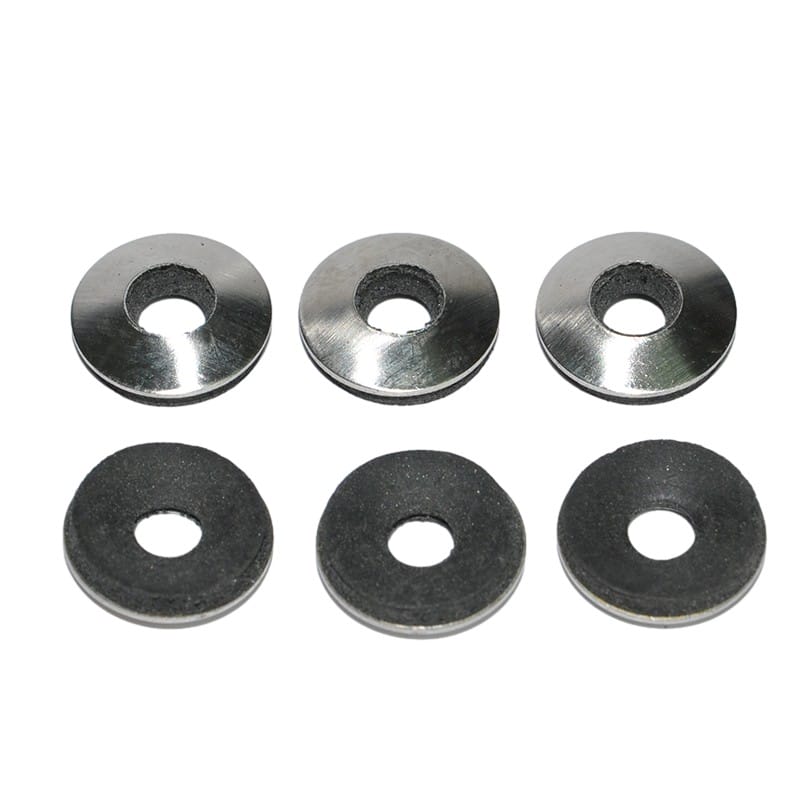 Jiaxing Aoke – Reliable Supplier of High-Performance EPDM Bonded Washers2026/07/10
Featuring prominent advantages such as aging resistance, high and low temperature resistance, water and vapor resistance, high resilience and ultra-long service life, EPDM bonded washers have become the most widely used and cost-effective sealing consumables for engineering supporting applications. ......