


Call Us
+86-573-83601567
Email Us
info@aoketrade.com

How to Control Tightening Torque for Instrument Threads?
Instrument pipelines in complete sets of chemical and automation projects adopt a large number of precision stamped connecting fittings. The thread fastening quality of stamped fittings directly determines the safety and stability of the whole pressure measurement system. Improper torque control of industrial fasteners may cause pipeline medium leakage and shutdown in mild cases, or equipment damage and safety accidents in severe cases.
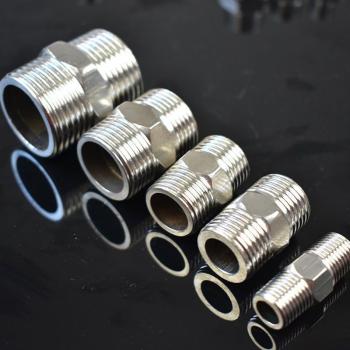
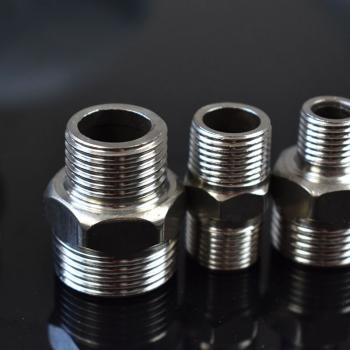
Some customers receive our stamped fitting samples with qualified dimension, flatness and thread go/no-go gauge test. However, leakage, insufficient gasket compression or thread stripping occurs half a year after installation. Failure analysis shows that in most cases, the issue is not the precision of stamped parts themselves, but improper on-site assembly process — especially thread tightening torque.
Three Typical On-site Failures Preventable via Torque Control
1. Leakage Caused by Inadequate Gasket Compression Workers only hand-tighten several turns. Copper gaskets are not plastically deformed, and medium seeps from gasket edges after startup. The correct operation is to follow torque values according to fitting specs and compress gaskets to the designed compression rate.
2. Stamped Body Cracking from Over-tightening Excessive force on thin-wall stamped fittings creates invisible circumferential cracks at ports. No leakage is found during pressure test, but temperature cycling expands cracks and triggers leakage after 1~2 months of operation. Rework cost for such faults is extremely high, often requiring pipe cutting and fitting replacement.
3. Thread Insert Spinning Out For plastic / aluminum alloy stamped fittings with copper inserts, assembly torque exceeding insert holding torque will rotate inserts together with nuts and scrap the whole fitting.
Recommended Tightening Torque for Stamped Instrument FittingsPrecondition: Stamped stainless steel / copper fittings + copper or aluminum gaskets + sealant; normal temperature working conditions
|
Thread Spec |
Recommended Torque |
Stamped Part Risk Points |
|
M10×1 (Fine Thread) |
8~12 N·m |
Thin stamped port wall, port bulging happens easily upon over-tightening |
|
M12×1.5 |
12~18 N·m |
Highest consumption, torque-controlled tightening is required |
|
G1/4, NPT1/4 |
10~15 N·m |
Taper surface sealing, stamped root prone to cracking |
|
G1/2, NPT1/2 |
18~25 N·m |
Main fitting specification, critical for gasket crush range |
|
G3/4 |
28~35 N·m |
Large stamped component, heavy-duty wrench required |
Extra Notes for Stamped Part Assembly
1. Single-use Gaskets: Copper and aluminum gaskets are plastic sealing components and must be replaced after disassembly for maintenance. Reused gaskets cannot guarantee sealing specific pressure.
2. Check Flatness of Stamped Surfaces: Visually inspect stamped sealing surfaces for stamping scratches and indentation before installation. Minor defects can be polished with fine oilstone; deep scratches mean scrap.
3. Correct Wrench Operation for Fittings with Thread Inserts: Hold the fitting body and only turn the nut. Do not twist both ends simultaneously, otherwise inserts may loosen.
4. Regular Calibration of Torque Wrenches: On-site torque wrenches should be calibrated every 6~12 months. Uncalibrated wrenches make torque control invalid
Jiaxing Aoke Trading can supply precision stamping parts, instrument connecting fittings and supporting industrial fasteners. Custom stamping processing is available, and non-standard stamping connectors can be produced according to drawings. Besides product delivery, we also provide assembly technical consultation to help customers standardize on-site thread assembly procedures, improve the assembly quality of instrument pipelines, reduce the risk of leakage faults in later project stage, and help the stable commissioning of chemical and automation projects.
Send Inquiry



X
We use cookies to offer you a better browsing experience, analyze site traffic and personalize content. By using this site, you agree to our use of cookies.
Privacy Policy
News
 Guide to Selecting Fastener Materials: Material Determines Performance, Heat Treatment Determines Strength, and Surface Treatment Determines Service Life!2026/07/13
A single sentence that captures the essence of the fastener industry: Choose the wrong material, and even the strongest fastener will break; Choose the wrong heat treatment, and even the highest-rated fastener is merely a false claim; Choose the wrong surface treatment, and even the best screw wi......
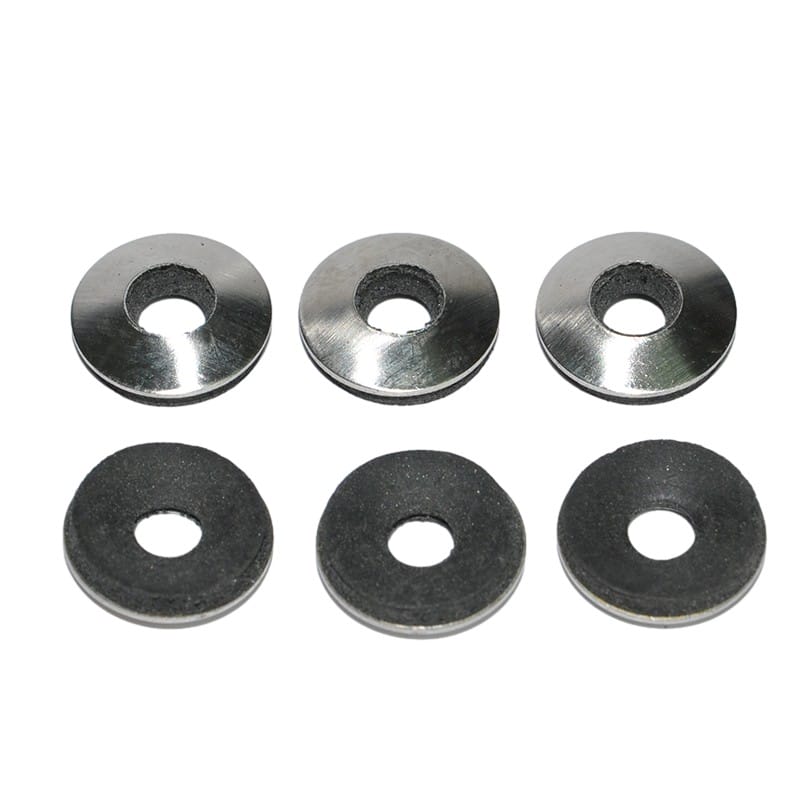 Jiaxing Aoke – Reliable Supplier of High-Performance EPDM Bonded Washers2026/07/10
Featuring prominent advantages such as aging resistance, high and low temperature resistance, water and vapor resistance, high resilience and ultra-long service life, EPDM bonded washers have become the most widely used and cost-effective sealing consumables for engineering supporting applications. ......