


Call Us
+86-573-83601567
Email Us
info@aoketrade.com

ISO2341 Clevis Pin: Hinge Connector Selection for Stamped-Weld Assemblies
It is common industry practice to source clevis pins and stamping parts from separate vendors for stamped‑weld assembly projects. This often leads to mismatched fitting tolerance, incompatible material performance and inconsistent lead‑times, further resulting in assembly jamming and production rework that delays overall project progress.
For overseas agricultural‑machine stamping hinge assemblies, Type‑A pins suffered pin creep after around 1100 field working hours under heavy farm‑site vibration. After upgrading to ISO2341 Type‑B pins locked by split pins, no escape failure occurred within 7500 cumulative operating hours. Type‑A is preferred for static stamping tooling to reduce part count during assembly.
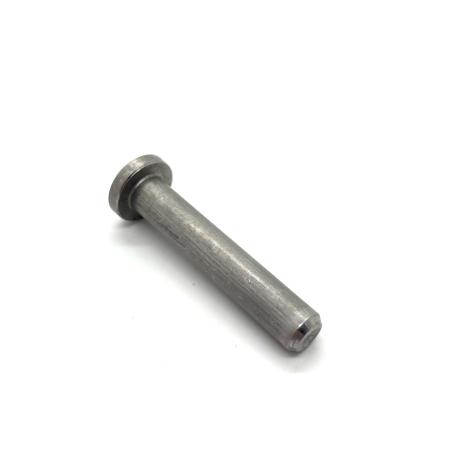
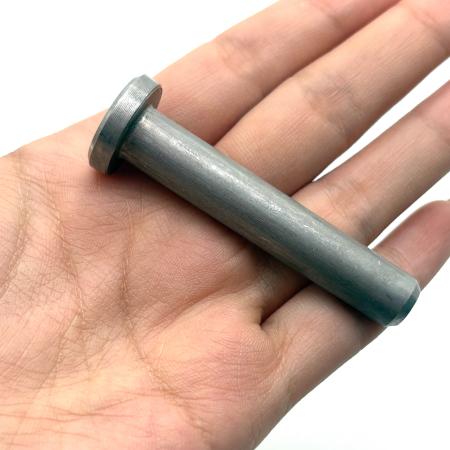
Our company strictly produces lead pin shafts in accordance with the ISO2341 international standard, and physical sample stock is Type A (without pin hole), Type B (with pin hole) is available upon order.
- Type A (without pin hole)
Application: Static positioning, low‑vibration tooling, stable hinge joints. Benefit: Fewer parts, simple & fast assembly.
- Type B (with pin hole at shank end)
Application: Hinges under vibration, alternating shock load and dynamic reciprocating movement. Preferred for construction machinery, agricultural machinery connecting rods and heavy‑duty dynamic joints.
1.Basic Specifications
Product Type: ISO2341 clevis pin. Type A: without pin hole; Type B: with pin hole. Available sample: Type A.
Available Material: Carbon steel, SUS304 stainless steel (sample material), SUS316 stainless steel.
Nominal Diameter: M3‑M100
Effective Length: 5‑100mm
2.Core Advantages
- Tolerance and surface treatment optimized for stamping‑assembly requirements, reducing assembly jam and one‑sided wear between pins and stamped lugs, ensuring smooth hinge movement and lowering later‑stage equipment rework rate.
- Three‑grade material options for different service environments of stamping assemblies: cost‑efficient carbon‑steel; SUS304 for outdoor humid conditions; SUS316 for salt‑spray and mild chemical corrosion.
- Pin modification according to stamping‑assembly drawings: adjustable chamfer, tolerance and surface finish for perfect component‑to‑component fit.
- Combined shipment of stamping parts plus clevis pins. Only one vendor contact required, simplifying procurement workflow with unified delivery & quality standards.
- Full material certificates & factory inspection records with batch traceability; orders from prototype sampling to mass‑volume project supply are supported.
3.Suitable Working Conditions & Typical Matched Stamping‑assembly Scenarios
Carbon‑steel clevis pin: Indoor stamped‑weld assemblies, tooling stamping components under dry non‑corrosive conditions. Zinc‑plating or black‑oxide finish is optional.
SUS304 clevis pin: Outdoor stamping assemblies, agricultural‑machinery stamped‑weld units, automation tooling components for ordinary humid open‑air service.
SUS316 clevis pin: Stamped‑weld parts for marine & coastal salt‑spray environment, water‑treatment‑equipment assemblies exposed to chloride ions and mild corrosive media.
Send Inquiry



X
We use cookies to offer you a better browsing experience, analyze site traffic and personalize content. By using this site, you agree to our use of cookies.
Privacy Policy
News
 Guide to Selecting Fastener Materials: Material Determines Performance, Heat Treatment Determines Strength, and Surface Treatment Determines Service Life!2026/07/13
A single sentence that captures the essence of the fastener industry: Choose the wrong material, and even the strongest fastener will break; Choose the wrong heat treatment, and even the highest-rated fastener is merely a false claim; Choose the wrong surface treatment, and even the best screw wi......
 Jiaxing Aoke – Reliable Supplier of High-Performance EPDM Bonded Washers2026/07/10
Featuring prominent advantages such as aging resistance, high and low temperature resistance, water and vapor resistance, high resilience and ultra-long service life, EPDM bonded washers have become the most widely used and cost-effective sealing consumables for engineering supporting applications. ......