


Call Us
+86-573-83601567
Email Us
info@aoketrade.com

No Licenses Required for Fastener Exports Starting in 2026
As 2026 begins, the fastener industry—often referred to as the “rice of industry”—is set to benefit from favorable policy winds.
Driven by both industrial upgrading and the global market recovery, the industry landscape is undergoing a profound transformation. Opportunities, challenges, and a shake-up—it’s all on the horizon.
I. No Export Licenses Required, Further Streamlining Customs Clearance
According to Announcement No. 79 of 2025 issued by the Ministry of Commerce and the General Administration of Customs, China will implement export license management for certain steel products starting January 1, 2026. The vast majority of fastener products are not included in the management catalog and are therefore not subject to export license requirements; enterprises can proceed with normal customs clearance without obtaining relevant licenses.
This measure streamlines foreign trade procedures, effectively reducing enterprises’ time costs and operational burdens. Against the backdrop of stricter regulations on similar steel products, the fastener industry is enjoying a more relaxed export environment, which enhances its international competitiveness and provides greater confidence for deepening its presence in overseas markets.
II. Steady Export Recovery and Optimized Global Market Landscape
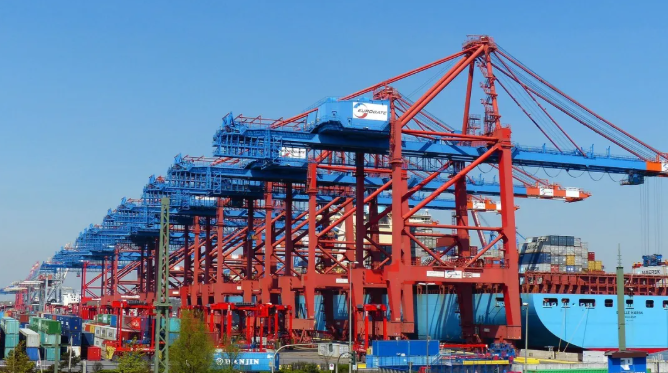
According to customs data compiled by Jinzhuzhu Fasteners Network: In 2025, China’s exports of steel fasteners reached 4.9997 million metric tons, a year-on-year increase of 7.31%, with export value totaling $10.046 billion, up 5.04% year-on-year.
Entering 2026, fastener exports have shown signs of stabilization and improvement:
• European and American markets: Steady recovery in high-end demand
• Emerging markets: Continued momentum in infrastructure and manufacturing investments in India and Southeast Asia
• “Belt and Road” partner countries: Remain a key pillar of China’s fastener exports
III. Explosive Demand for New Energy Opens New Growth Trajectories for High-End Fasteners
The rapid rise of the new energy industry is becoming a powerful engine driving the growth of fastener demand. The rapid expansion of sectors such as new energy vehicles, wind power, photovoltaics, and energy storage continues to generate demand for specialized fasteners featuring high strength, corrosion resistance, and lightweight design, opening up entirely new growth opportunities for the industry.
Unlike traditional standard fasteners, high-end fasteners place greater emphasis on performance, reliability, and longevity. The industry is accelerating its shift from competition based on scale to competition centered on technology and value.
IV. Reshaping the Industry Landscape
Currently, China’s fastener industry is in a critical phase of structural adjustment and transformation and upgrading.
Competition among low- and mid-range products is becoming increasingly homogeneous, and price wars are losing their significance. A development orientation centered on technological innovation, quality improvement, and value enhancement is becoming increasingly clear.
Which Sectors Are Accelerating Domestic Substitution?
Aerospace, nuclear power, offshore wind power, new energy vehicles… The pace of domestic production for high-end specialty fasteners continues to accelerate. High-value-added, high-performance products are gradually becoming the core competitive advantage of enterprises.
V. Dual-Drive of Intelligence and Green Development: Forging Core Competitiveness
Smart Manufacturing
Automated production lines, multi-station cold heading equipment, robotic loading/unloading, online inspection, and digital management platforms—these technologies are rapidly becoming widespread among leading enterprises.
Green Development
Guided by the “dual carbon” goals and environmental policies, clean production processes such as chromium-free passivation, eco-friendly electroplating, and low-carbon materials are being rapidly adopted.
Environmental protection is not a cost, but a prerequisite. Companies lacking green production capabilities will be excluded from mainstream supply chains. Environmental compliance and green manufacturing capabilities have become essential credentials for enterprises to enter high-end supply chains both domestically and internationally.
VI. Opportunities and Challenges Coexist; High-Quality Development Moves Steadily Forward
While China’s fastener industry continues to advance steadily, it still faces practical challenges such as partial reliance on imports for high-end raw materials and key equipment, as well as fluctuations in raw material prices. The complex and ever-changing international trade environment also places higher demands on the global expansion strategies of fastener enterprises.
As market-driven survival of the fittest accelerates and industry concentration continues to rise, adhering to technological innovation and pursuing a path of high-quality development has become both a consensus and an inevitable choice within the industry.
Send Inquiry



X
We use cookies to offer you a better browsing experience, analyze site traffic and personalize content. By using this site, you agree to our use of cookies.
Privacy Policy
News
 Guide to Selecting Fastener Materials: Material Determines Performance, Heat Treatment Determines Strength, and Surface Treatment Determines Service Life!2026/07/13
A single sentence that captures the essence of the fastener industry: Choose the wrong material, and even the strongest fastener will break; Choose the wrong heat treatment, and even the highest-rated fastener is merely a false claim; Choose the wrong surface treatment, and even the best screw wi......
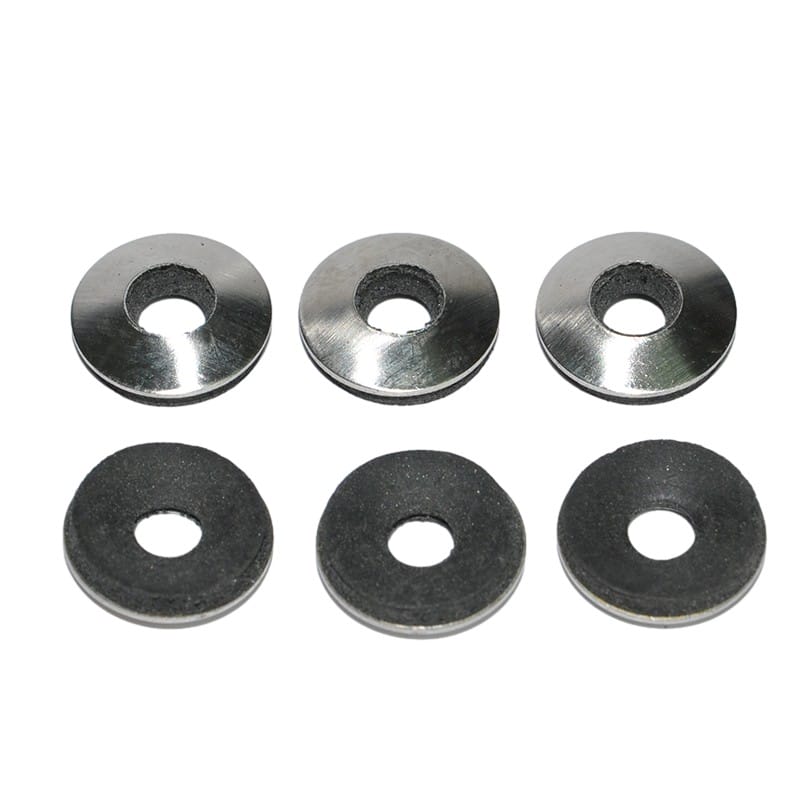 Jiaxing Aoke – Reliable Supplier of High-Performance EPDM Bonded Washers2026/07/10
Featuring prominent advantages such as aging resistance, high and low temperature resistance, water and vapor resistance, high resilience and ultra-long service life, EPDM bonded washers have become the most widely used and cost-effective sealing consumables for engineering supporting applications. ......