


Call Us
+86-573-83601567
Email Us
info@aoketrade.com

Why Stud Bolts Are Widely Used Instead of Single-End Hex Bolts
Many purchasers from machinery, steel structure and heavy-duty industries have the same question: single-end hex bolts are easy to install, so why are stud bolts the universal choice for large machinery, boilers, pipelines and steel structure projects? Single-end bolts are not poor in performance, but they have inherent drawbacks in applications involving thick component connections, frequent disassembly and assembly, as well as high-temperature and high-pressure working conditions. Featuring a headless structure with threads on both ends, stud bolts perfectly overcome the application limitations of single-end bolts.
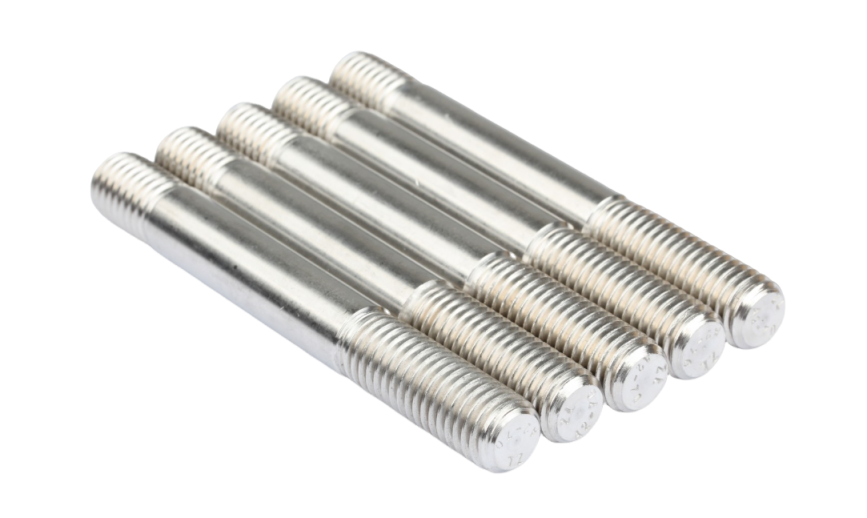
1. What Is a Stud Bolt
The standard industrial term is stud, also known as double-end screw. It is a headless fastener with threads machined on both ends of the shank. The middle shank is available in smooth shank and fully threaded types, and the shank diameter can be customized on demand. It is widely used for fixed connections of all kinds of heavy machinery. Products are supplied in carbon steel and stainless steel with multiple strength grades, complying with universal industrial standards including DIN, ISO and ASME.
Conventional single-end bolts are equipped with a hex head and only have threads on one side. In contrast, nuts can be tightened on both ends of stud bolts without restrictions on installation space and plate thickness — this is the core structural difference between the two fasteners.
2. Typical Application Scenarios
- Detachable Auxiliary Components for Large Equipment
- For frequently disassembled parts such as reducers, mechanical seal seats, equipment sight glasses and pressure vessel covers, one end of the stud is screwed into the main base, and nuts are fastened on the other end after installing accessories.
- Connections of Extra-Thick Plates & Long Joints
- For steel main girders, thick flanges and large equipment shells, the total thickness of connected components exceeds the maximum applicable length of single-end bolts. The head of single-end bolts cannot fit tightly and leaves no operating space for wrenches. Stud bolts with nuts locked on both ends are ideal for thick plate splicing.
- Narrow Space & Embedded Installation Scenarios
- Anchor bolts, concrete roof hangers, pipeline flanges, boiler steel structures and tower crane suspension parts only allow one side to access the fastener, with no room for a bolt head. One end of the stud is screwed into the base, and the nut is tightened externally. Single-end bolts cannot be installed here due to the obstruction of their hex heads.
- High-Temperature, Vibration and High-Pressure Equipment
- Mining machinery, oil & gas pipelines, boilers and generator sets endure alternating loads and high-temperature creep for long-term operation. Single-end bolts tend to loosen due to stress concentration at their heads. Stud bolts bear uniform stress; when matched with lock washers, they maintain stable clamping force for a long time and reduce safety risks caused by loose connections.
3. Core Advantages
- Headless design, suitable for embedded installation, narrow spaces and extra-thick plate connections.
- Only the stud wears out during repeated disassembly and assembly, protecting internal threads of equipment bases and cutting maintenance costs.
- Uniform stress distribution on both ends, outstanding vibration resistance and high-temperature creep resistance for more reliable clamping performance.
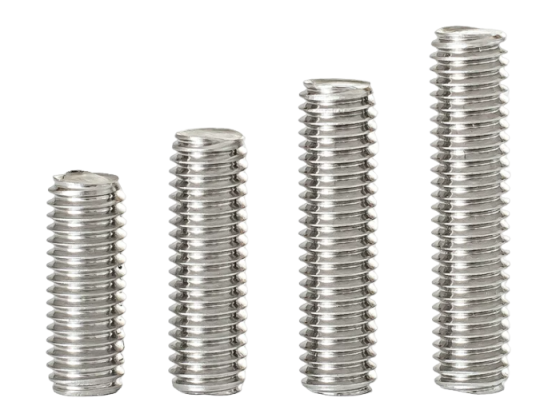
4. Key Notes on Anti-Loosening of Threaded Connections
Mining equipment, bridges, boilers and chemical facilities are constantly affected by vibration and temperature fluctuations, which may instantly eliminate friction between mating threads. Continuous alternating loads will loosen nuts and cause connection failure, possibly leading to equipment leakage, structural collapse and other safety accidents. All stud bolts must be assembled with anti-loosening accessories such as spring washers, lock nuts and thread locker to guarantee long-term clamping stability.
5. Common Surface Treatments for Stud Bolts
Fasteners require both anti-corrosion performance and interchangeable thread fit. Different surface treatments are matched to corresponding industrial working conditions:
| Surface Treatment | Core Features | Application |
| Electrogalvanizing | Basic anti-rust solution, stable thread precision, strong interchangeability | Automotive, home appliances, general machinery |
| Blackening / Oxidation | Low-cost solution to improve wear resistance, basic anti-rust treatment | General indoor equipment |
| Phosphating | Enhances coating adhesion and surface bonding strength | Pre-treatment for painting/coating |
| Non-electrolytic Zinc Flake Coating (Dacromet) | High temperature resistance, salt spray corrosion resistance, no hydrogen embrittlement risk | Wind power, offshore steel structures, high-temperature equipment |
Q1: Under what working conditions must stud bolts be used instead of single-end bolts?
A: Stud bolts are preferred for equipment requiring frequent disassembly and assembly, extra-thick plates, assemblies with no wrench access on one side, high-temperature/vibration/high-pressure machinery, and embedded anchor connection applications.
Q2: How to prevent stud bolts from loosening during long-term service?
A: Use lock nuts and spring washers. Select Dacromet-coated studs for high-temperature environments, apply thread locker during assembly, and recheck torque regularly.
Q3: How to select the right surface treatment for stud bolts?
A: Choose blackening or electrogalvanizing for ordinary indoor equipment; adopt Dacromet non-electrolytic zinc coating for outdoor, marine and salt spray environments; pick high-temperature resistant coatings for high-temperature boilers and chemical equipment.
Company Introduction
Previous:HOLIDAY NOTICE
Send Inquiry



X
We use cookies to offer you a better browsing experience, analyze site traffic and personalize content. By using this site, you agree to our use of cookies.
Privacy Policy
News
 Guide to Selecting Fastener Materials: Material Determines Performance, Heat Treatment Determines Strength, and Surface Treatment Determines Service Life!2026/07/13
A single sentence that captures the essence of the fastener industry: Choose the wrong material, and even the strongest fastener will break; Choose the wrong heat treatment, and even the highest-rated fastener is merely a false claim; Choose the wrong surface treatment, and even the best screw wi......
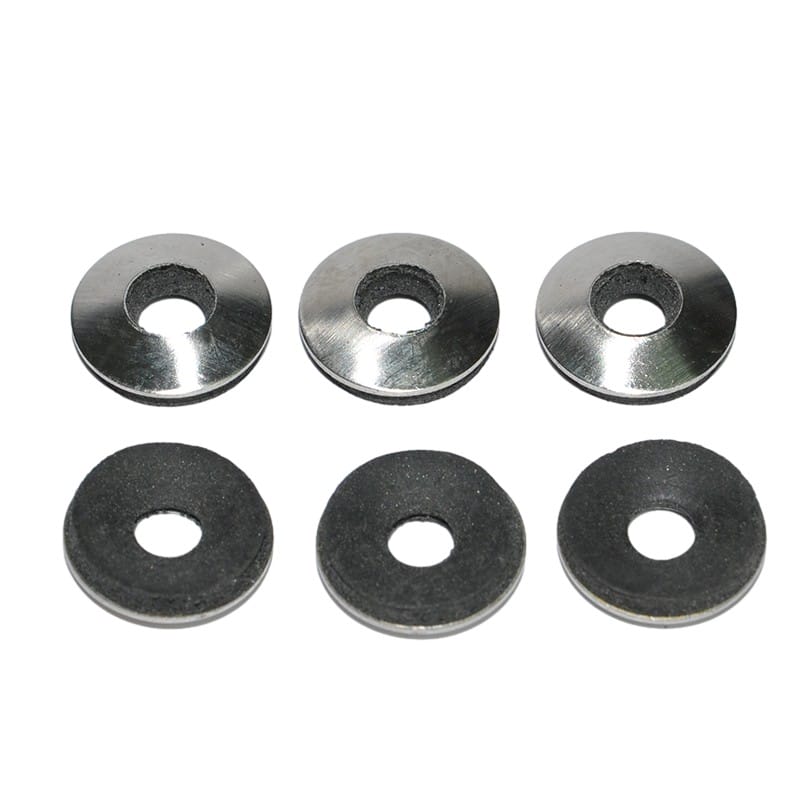 Jiaxing Aoke – Reliable Supplier of High-Performance EPDM Bonded Washers2026/07/10
Featuring prominent advantages such as aging resistance, high and low temperature resistance, water and vapor resistance, high resilience and ultra-long service life, EPDM bonded washers have become the most widely used and cost-effective sealing consumables for engineering supporting applications. ......