


Call Us
+86-573-83601567
Email Us
info@aoketrade.com

China’s Foreign Trade Growth Hits Five-Year High
As the first year of the 15th Five-Year Plan, the momentum of China’s foreign trade has drawn significant attention.
Data released by the General Administration of Customs on the 14th showed that in the first quarter of 2026, China’s total import and export value of goods reached 11.84 trillion yuan, exceeding 11 trillion yuan for the first time in history for the same period. This represents a year-on-year growth rate of 15%, marking the highest level in the past five years and highlighting the strong resilience of China’s foreign trade.
As a key driver of economic stability and an integral part of an open economy, what factors underpin the rapid growth of China’s foreign trade?
First, the foundation for development remains solid. According to customs statistics, in the first quarter of this year, the growth rate of China’s imports and exports returned to double digits for the first time since the fourth quarter of 2022, with the total value of imports and exports remaining above 10 trillion yuan for 12 consecutive quarters.
In the first quarter, China’s exports totaled 6.85 trillion yuan, up 11.9% year-on-year. Among the various export products, 3D printers, electric vehicles, and lithium batteries stood out, with exports growing by 119%, 77.5%, and 50.4%, respectively.
Meanwhile, driven by factors such as the rapid rise in international commodity prices and the recovery of domestic demand, China’s imports reached 4.99 trillion yuan in the first quarter—a record high for the same period in history—with the growth rate accelerating by 2.5 percentage points from the previous two months to 19.6%. Since the beginning of this year, the combined effects of the “Two Major Projects” and “Two New” policies, coupled with the stimulus from the extended Spring Festival holiday, have driven first-quarter imports of mechanical and electrical products and consumer goods to grow by 21.7% and 5.4% year-on-year, respectively.
Wang Jun, Deputy Commissioner of the General Administration of Customs, noted that in the first quarter, China’s imports from more than 150 countries and regions saw growth, with 51 countries and regions recording imports exceeding 10 billion yuan—an increase of three compared to the same period last year.
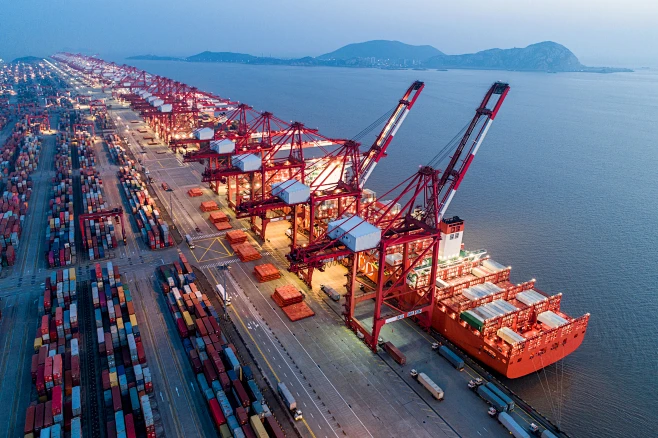
Second, corporate vitality remains strong. Private enterprises have maintained their position as China’s largest foreign trade entity for many consecutive years, and as various policy benefits are being released at an accelerated pace, the vitality of private enterprises has been effectively stimulated.
In the first quarter, the number of enterprises with import and export records reached 618,000, of which more than 540,000 were private enterprises. Their import and export volume totaled 6.78 trillion yuan, a year-on-year increase of 16.2%, with their share of China’s total import and export value further rising to 57.3%.
Foreign-invested enterprises are deepening their roots in China while serving the global market. In the first quarter of this year, imports and exports by foreign-invested enterprises grew by 16.1% year-on-year, marking eight consecutive quarters of growth. Both export and import growth rates reached double digits. During the first quarter, more than 6,200 new foreign-invested enterprises were registered with customs, and the number of foreign-invested enterprises with import and export records increased by over 1,000 compared to the same period last year, reaching 69,000.
Finally, domestic growth momentum remains strong. In recent years, China’s international market layout has become increasingly diversified and coordinated, with its risk-resilience continuously strengthening.
In the first quarter, despite a decline in trade with the United States, China’s trade with non-U.S. markets demonstrated robust momentum. Trade with ASEAN and Latin America both grew by 15.4%, trade with Africa increased by 23.7%, and trade with the EU and the UK rose by 14.6% and 13.1%, respectively.
During the same period, regional development leveraged respective strengths to drive improvements in both the quality and efficiency of foreign trade. In the first quarter, China’s eastern, central-western, and northeastern regions fully utilized their unique geographical characteristics and industrial advantages, with imports and exports growing by 14.3%, 20.2%, and 4%, respectively. Major foreign trade provinces—Zhejiang, Guangdong, Jiangsu, Shanghai, and Shandong—collectively contributed more than 60% of the increase in imports and exports.
“Overall, the rapid growth in imports and exports during the first quarter has laid a solid foundation for stable foreign trade growth throughout the year,” Wang Jun stated. At the same time, he noted that there remain numerous external uncertainties and destabilizing factors. Recently, the World Trade Organization (WTO) projected that the growth rate of global merchandise trade will slow by 2.7 percentage points to 1.9% in 2026. A report by the Organization for Economic Cooperation and Development (OECD) pointed out that the evolving conflicts in the Middle East pose a test to the resilience of the global economy.
The underlying conditions and fundamental trends supporting China’s long-term economic growth remain unchanged, and the country’s advantages and potential in foreign trade continue to emerge. In March, China’s Manufacturing Purchasing Managers’ Index (PMI) returned to expansionary territory, with indicators such as new export orders and imports showing a marked rebound. Results from the Customs Trade Sentiment Survey also indicate a significant increase in the number of enterprises reporting growth in new export and import orders.
Send Inquiry



X
We use cookies to offer you a better browsing experience, analyze site traffic and personalize content. By using this site, you agree to our use of cookies.
Privacy Policy
News
 Guide to Selecting Fastener Materials: Material Determines Performance, Heat Treatment Determines Strength, and Surface Treatment Determines Service Life!2026/07/13
A single sentence that captures the essence of the fastener industry: Choose the wrong material, and even the strongest fastener will break; Choose the wrong heat treatment, and even the highest-rated fastener is merely a false claim; Choose the wrong surface treatment, and even the best screw wi......
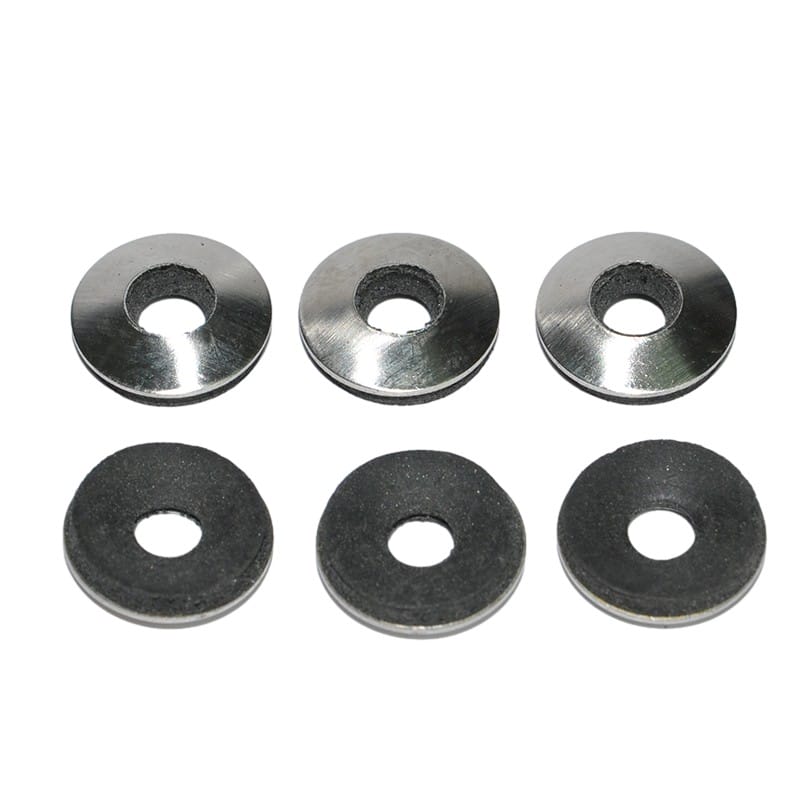 Jiaxing Aoke – Reliable Supplier of High-Performance EPDM Bonded Washers2026/07/10
Featuring prominent advantages such as aging resistance, high and low temperature resistance, water and vapor resistance, high resilience and ultra-long service life, EPDM bonded washers have become the most widely used and cost-effective sealing consumables for engineering supporting applications. ......