


Call Us
+86-573-83601567
Email Us
info@aoketrade.com

Hardware Stamping Part Exports Amid Strait of Hormuz Tensions: 3‑Dimensional Comparison of Red Sea, Cape of Good Hope Detour and China‑Europe Railway Express
The Asia‑Europe global logistics landscape keeps being reshaped by geopolitical events in the Middle East. Fluctuating vessel transits through the Strait of Hormuz drive up international fuel prices and push overall ocean‑shipping costs higher. Partial tentative resumptions of Red Sea services come with persistent risks. A large number of container vessels opt for the Cape of Good Hope detour, creating notable divergence in transit time and freight rates. This poses new challenges for hardware stamping‑part exports featuring large shipment volumes and high cost‑sensitivity.
Working together with manufacturing partner Jiaxing Aoke Hardware, Jiaxing Aoke Trading addresses the characteristics of stamping‑part orders ranging from full‑container bulk shipments to small‑batch urgent orders. We compare three mainstream transport solutions: Red Sea sea freight via the Suez Canal, sea freight detour around the Cape of Good Hope, and China‑Europe Railway Express. Lead time, cost, risks and applicable cargo are analyzed to deliver practical reference for overseas customers on production scheduling and shipment planning.
1.Red Sea Route (via Suez Canal)
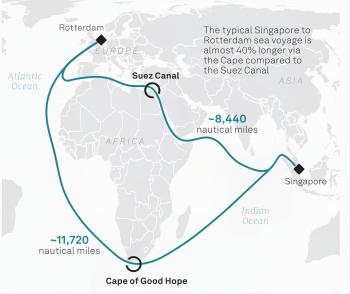
This is the traditional shortest Asia‑Europe sea lane with standard door‑to‑door transit of 28‑35 days. A small number of shipping lines have partially resumed Red Sea voyages; however, security risks remain around the Bab‑el‑Mandeb Strait. War‑risk surcharges stay high, container space is limited, and unexpected service suspension may occur.
- Advantages: Shortest sailing distance with theoretically optimal logistics cost for large‑volume orders.
- Risks: Recurring geopolitical conflicts lead to unpredictable delivery time.
- Suitable for: Bulk standard stamping‑part orders where customers accept flexible lead‑times.
2.Sea Freight Detour around the Cape of Good Hope
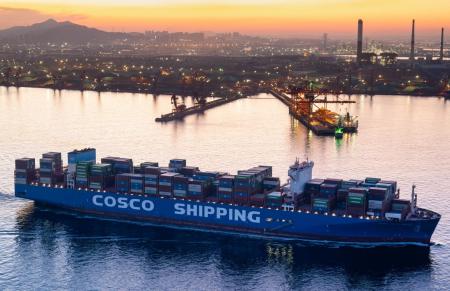
This route avoids high‑risk Red Sea waters, yet transit is extended by 10‑14 days to 42‑54 days, with rising fuel and total logistics expenses.
- Advantages: Ideal for full‑container, heavy‑weight and large‑volume hardware stamping parts.
- Risks: Greatly extended delivery cycle increases customers’ inventory pressure.
- Suitable for: Large‑batch precision‑stamping and general sheet‑metal stamping‑part orders with ample lead‑time.
3.China‑Europe Railway Express (Overland Corridor)
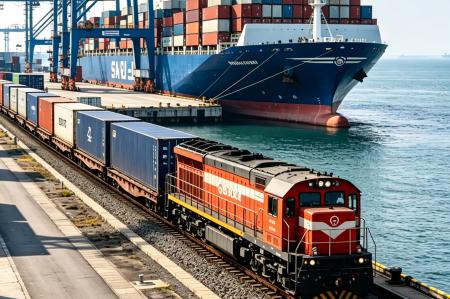
This land route completely bypasses maritime geopolitical risks in the Strait of Hormuz and Red Sea with stable schedules. Door‑to‑door transit takes 16‑25 days. In recent years, inquiries for urgent restocks and non‑standard rush orders have grown steadily, making rail freight a vital backup solution to guarantee delivery of industrial components.
- Advantages: Fast transit time, insulated from maritime geopolitical risks.
- Risks: Unit logistics cost is higher than ocean freight.
- Suitable for: Re‑orders after sampling of non‑standard stamping parts, small‑batch stamping‑part procurement and urgent replacement parts for equipment projects.
Situation Summary: Shipping volatility linked to the Strait of Hormuz continues to drive logistics‑cost increases. Risks for direct Red Sea services remain unresolved. The Cape of Good Hope detour fits large‑volume, non‑urgent stamping‑part orders, while China‑Europe Railway Express caters to urgent small‑batch shipments. No single route holds absolute advantage; selection shall be based on order volume and project milestones.
Specialized in stamping‑part foreign trade, Jiaxing Aoke Trading draws on the production capacity of Jiaxing Aoke Hardware to provide integrated services covering stamping‑part manufacturing, export and sourcing. For global hardware stamping‑part demands, whether for bulk precision‑stamping orders, drawing‑based custom non‑standard stamping parts or one‑stop procurement, we design optimal shipment plans based on current conditions of Red Sea shipping, Cape detour and China‑Europe Railway Express. We mitigate supply‑chain uncertainty caused by geopolitical factors such as tensions in the Strait of Hormuz and ensure consistent delivery.
Send Inquiry



X
We use cookies to offer you a better browsing experience, analyze site traffic and personalize content. By using this site, you agree to our use of cookies.
Privacy Policy
News
 Guide to Selecting Fastener Materials: Material Determines Performance, Heat Treatment Determines Strength, and Surface Treatment Determines Service Life!2026/07/13
A single sentence that captures the essence of the fastener industry: Choose the wrong material, and even the strongest fastener will break; Choose the wrong heat treatment, and even the highest-rated fastener is merely a false claim; Choose the wrong surface treatment, and even the best screw wi......
 Jiaxing Aoke – Reliable Supplier of High-Performance EPDM Bonded Washers2026/07/10
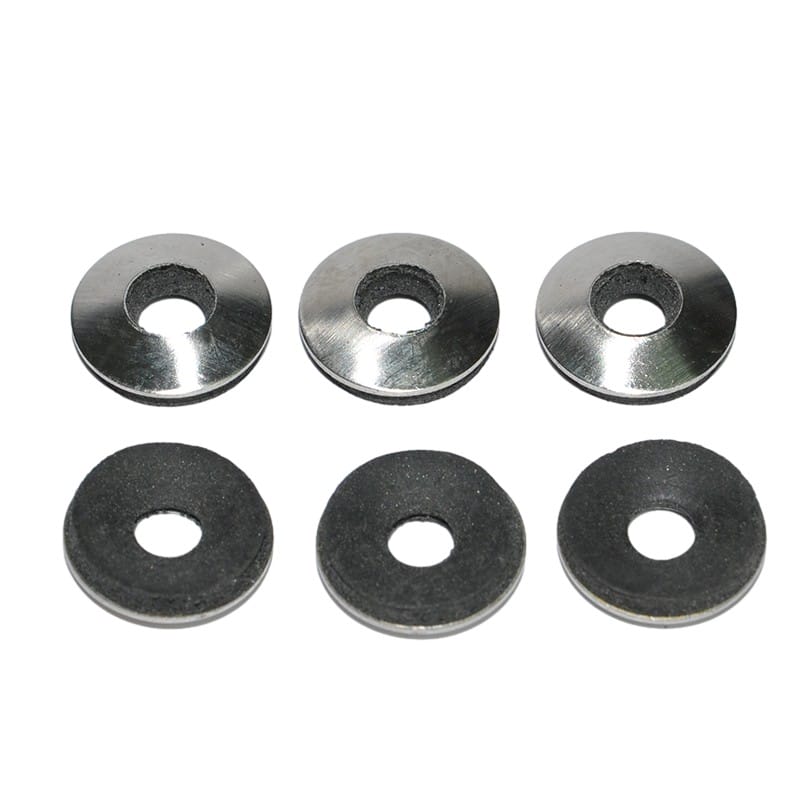
Featuring prominent advantages such as aging resistance, high and low temperature resistance, water and vapor resistance, high resilience and ultra-long service life, EPDM bonded washers have become the most widely used and cost-effective sealing consumables for engineering supporting applications. ......