


Call Us
+86-573-83601567
Email Us
info@aoketrade.com

Industry News

China’s Manufacturing PMI Returns to Expansionary Territory in June
The National Bureau of Statistics of China announced on June 30 that China’s Manufacturing Purchasing Managers’ Index (PMI) for June stood at 50.3%, up 0.3 percentage points from the previous month, returning to expansionary territory.
View Details
China Leads the World in Offshore Wind Power; High-End Fasteners Drive High-Quality Development of the New Energy Industry
The trends toward larger turbines and deeper offshore locations place more stringent demands on core components. As core connecting components of wind turbines, fasteners are widely used in critical locations such as tower flanges, blade roots, nacelle bases, and offshore pile foundations. Data show......
View Details
In Which Scenarios Are Square Nuts Essential?
Square nuts offer excellent anti-rotation capabilities and a larger contact area. Compared to conventional hex nuts, they demonstrate even greater advantages in special installation environments, load-bearing structures, and vibrating equipment, and are widely used across multiple industries. Below ......
View Details

China's Goods Trade Imports and Exports Rose 15.3% in the First Five Months of This Year
According to a report on the General Administration of Customs website, customs statistics show that in the first five months of 2026, China's total value of goods trade imports and exports reached 20.68 trillion yuan, up 15.3% year-on-year (same as below). Of this total, exports amounted to 11.91 t......
View Details
4.23% Year-Over-Year Growth! Global Fastener Market Headed Toward $100 Billion!
Recently, market research firm Mordor Intelligence released an in-depth report on the global industrial fastener industry through 2026, providing a comprehensive analysis of the industry’s overall scale, growth drivers, technological trends, and regional landscape over the next five years. Data indi......
View Details


X
We use cookies to offer you a better browsing experience, analyze site traffic and personalize content. By using this site, you agree to our use of cookies.
Privacy Policy
News
 Guide to Selecting Fastener Materials: Material Determines Performance, Heat Treatment Determines Strength, and Surface Treatment Determines Service Life!2026/07/13
A single sentence that captures the essence of the fastener industry: Choose the wrong material, and even the strongest fastener will break; Choose the wrong heat treatment, and even the highest-rated fastener is merely a false claim; Choose the wrong surface treatment, and even the best screw wi......
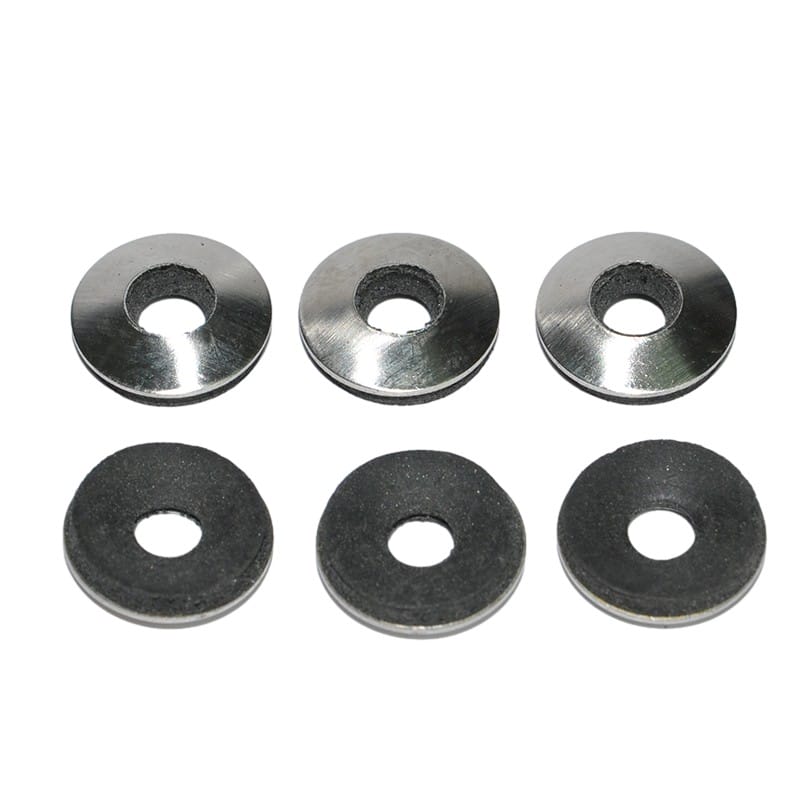 Jiaxing Aoke – Reliable Supplier of High-Performance EPDM Bonded Washers2026/07/10
Featuring prominent advantages such as aging resistance, high and low temperature resistance, water and vapor resistance, high resilience and ultra-long service life, EPDM bonded washers have become the most widely used and cost-effective sealing consumables for engineering supporting applications. ......